Indoor zones, pollutants and operating context.
Indoor monitoring design connects measured quantities with building zones and operating decisions. The required channels depend on ventilation, particle sources, material emissions, thermal comfort and the intended study. Occupancy and equipment records help explain changes in measured conditions.
Define a measurement location and averaging period for each channel. A meeting room, corridor, supply duct and return-air path represent different samples. One sensor cannot establish the distribution across all those spaces without supporting evidence.
CO₂ can support ventilation assessment when occupancy, outdoor concentration and source assumptions are understood. PM, selective gases and humidity provide additional information for other questions. Safety alarms require suitable separate equipment and system procedures.
Source strength, ventilation and sensor response.
Room concentration reflects sources, exchange with other air, removal and mixing. An ideal well-mixed model relates concentration change to those processes. Actual rooms can have localized plumes and incomplete mixing, so location should match the intended decision.
In a simplified decay model without an ongoing source, excess concentration follows C(t)−Cout = (C0−Cout) exp(−nt), where n is an air-change rate and t is time. At n = 1 per hour, excess concentration falls to about 36.8% after one hour. Using that model to infer ventilation requires its assumptions to be assessed.
Sensor response and filtering add their own delay. A rapid occupancy change may appear smoothed by a slow enclosure or algorithm. Characterize the completed device when event timing matters.
Indoor temperature and humidity sensors should represent room air while avoiding local board heat and direct solar loading. CO₂ automatic calibration needs the prescribed reference exposure; a continuously occupied zone may require a different calibration procedure.
Indoor monitoring terminology.
- Monitoring zone
- A space or air path represented by a specified measurement.
- Air-change rate
- Air exchange per unit time within a stated volume and model.
- Mixing
- The degree to which concentration is distributed throughout the sampled space.
- Excess concentration
- Concentration above a defined background or outdoor reference.
- Commissioning
- Verification of channels, placement, configuration and required data behavior.
- Time alignment
- Matching measurements and operational records on a consistent time basis.
Monitoring guidance and integrated building devices.
EPA's Air Sensor Guidebook was first published in 2014 and enhanced in 2022. Its evaluation and interpretation approach supports transparent monitoring design, although each indoor application also needs its own building and sensor requirements.
Digital CO₂ components, combined air-quality nodes and industrial humidity probes provide different integration routes. Their formats change wiring and maintenance effort while leaving placement and representativeness as system-level responsibilities.
Indoor sensor and manufacturer options.
Sensirion SCD41 covers compact direct CO₂ measurement. SEN55 combines particle, gas-index and environmental channels. Vaisala HMP110 provides a probe format for humidity and temperature. The selection should follow each channel's uncertainty and installation requirements.
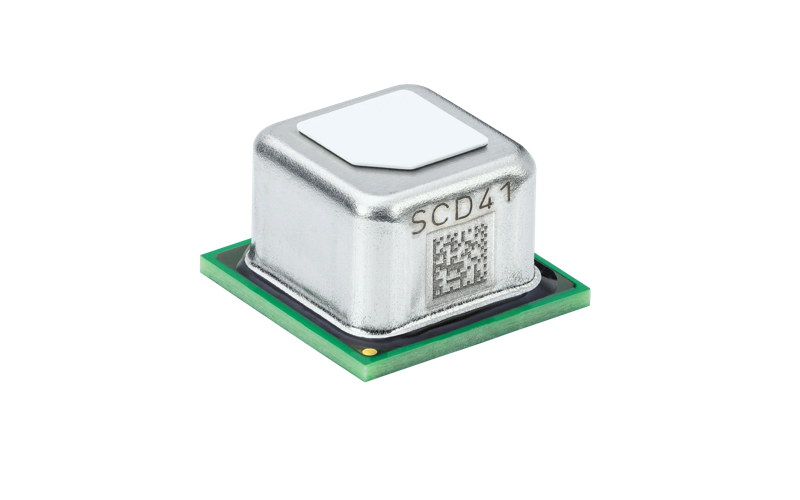
SCD41-D-R2
- Technology
- Photoacoustic NDIR CO₂ component
- Measurement
- Specified 400–5,000 ppm; wider numerical output range
- Interface
- I²C; integrated temperature/humidity compensation
- Consider for
- Compact CO₂ monitor designs
- Integration consideration
- April 2025 datasheet gives concentration-dependent accuracy. Automatic calibration requires documented reference exposure.
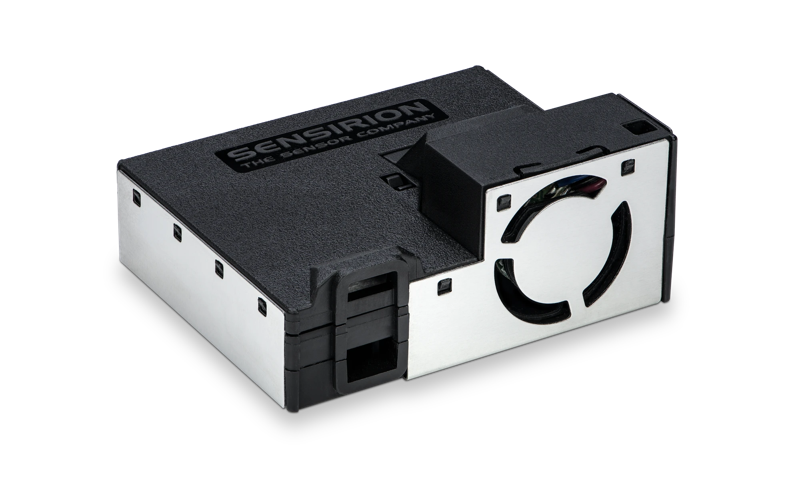
SEN55
- Technology
- Optical particles, metal-oxide gas indices and RH/T module
- Measurement
- PM mass estimates, VOC Index, NOx Index, humidity and temperature
- Interface
- I²C; nominal 5 V supply
- Consider for
- Integrated indoor air-monitoring equipment
- Integration consideration
- VOC and NOx outputs are indices. Enclosure airflow, self-heating and startup affect the measured signals.
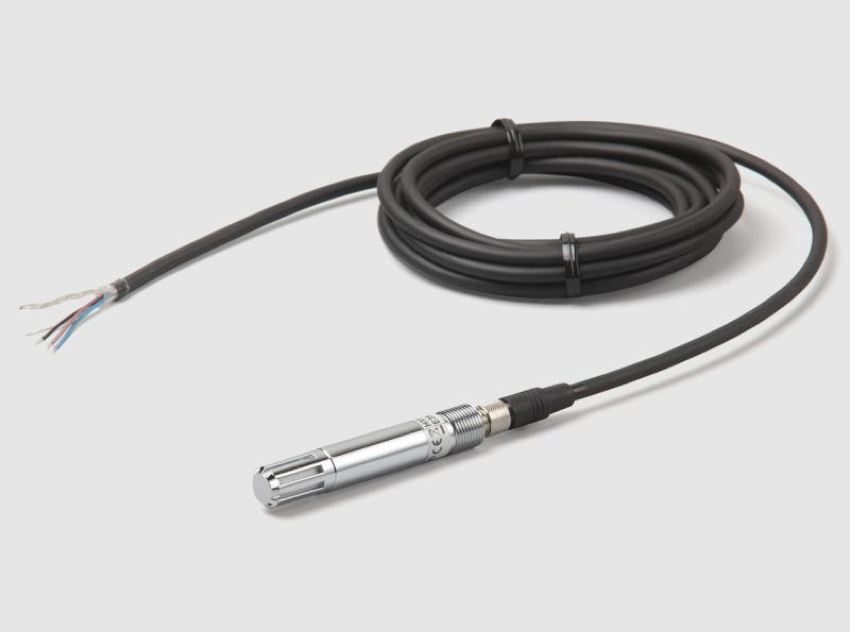
HMP110
- Technology
- Humidity / temperature probe
- Measurement
- 0–100% RH; −40 to +80 °C operating range
- Interface
- Voltage outputs; optional RS485
- Consider for
- Industrial ambient monitoring
- Integration consideration
- Confirm model protocol. Do not assume HMP110T temperature-only options apply to all variants.
These are components and probes for a monitoring design. A complete installed package also needs power, enclosure, acquisition, timestamps and a defined maintenance procedure. Channel combinations should preserve the individual measurement definitions.
Zoning, validation and operating records.
Choose representative locations based on occupancy, airflow and likely sources. Avoid direct breath, supply jets or heat sources when the objective is a room-average estimate. A targeted source investigation may intentionally use a different placement and should state that purpose.
Compare devices side by side before distributing them across zones. Check offsets, environmental response and timing. Recheck after enclosure or firmware changes. An agreement test at one condition cannot establish accuracy throughout all operating conditions.
Record zone identity, sensor serial number, calibration, units and timestamps. Preserve startup, fault and missing-data states. Link occupancy and ventilation events where available, with appropriate handling of any personal information.
Plan access for cleaning, calibration and replacement. Include power, cabling, enclosure, service and data-retention requirements in procurement. For control applications, establish how unavailable or suspect measurements affect the building response and verify that behavior during commissioning.
Indoor monitoring design questions.
Can one monitor represent several rooms?
Its representativeness depends on airflow and the study objective. Separate zones generally require their own evidence or measurements.
Can CO₂ decay always establish an air-change rate?
The method requires suitable mixing, source and background assumptions. Ongoing sources and exchange with other rooms can affect the estimate.
What should happen when a control sensor becomes unavailable?
Define the system's fallback and fault response, then verify it during commissioning. Keep the invalid period identifiable in stored records.
Read the original documentation.
Specifications use the linked manufacturer documents and their stated revisions. Review the current datasheet and exact ordered variant before final specification. Comparisons use manufacturer specifications and technical documentation.