CO₂ concentration and ventilation.
CO₂ concentration describes the fraction of carbon dioxide in a gas mixture. Indoor monitors usually express this as parts per million by volume, or ppm. A reading of 1,000 ppm corresponds to 0.1% by volume. People exhale CO₂, so its rise and fall can help investigate how occupied rooms are ventilated. Occupancy, outdoor concentration, mixing and other CO₂ sources all affect the interpretation.
A CO₂ sensor does not measure airborne particles, carbon monoxide or every indoor pollutant. Pair it with the measurements your question requires. A room can have little CO₂ accumulation and still contain particles from cooking or VOCs from a cleaning product. Read the particle guide and VOC guide when planning an indoor monitoring system.
Infrared absorption and photoacoustic sensing.
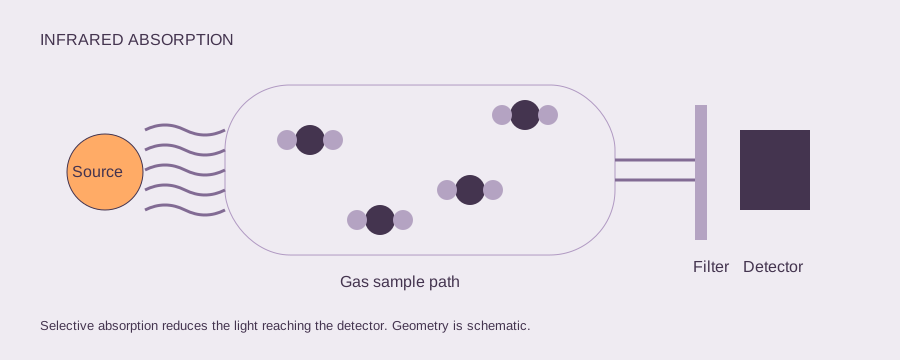
In a non-dispersive infrared sensor, an infrared source sends light through a gas sample to a detector. CO₂ absorbs light in selected infrared bands. A filter selects a relevant band, and the electronics relate the remaining intensity to concentration using calibration. Optical path length, temperature and pressure influence the measurement. A reference channel can help distinguish gas absorption from changes in the source or optical system.
Photoacoustic CO₂ sensors also use infrared absorption. Instead of detecting transmitted light, they detect the pressure variation produced when modulated absorbed energy heats the gas. The readout method differs, but the gas is still measured through its physical interaction with infrared energy. Metal-oxide sensors reporting “equivalent CO₂” infer a value from other gas responses; they are not direct CO₂ measurements.
For an optical absorption path, the Beer–Lambert relationship is commonly written I = I₀ exp(−k c L). Here I is transmitted intensity, I₀ is incident intensity, c is concentration, L is path length and k represents absorption under the chosen conditions. Real instruments account for spectral response and environmental effects rather than relying on this expression alone.
CO₂ measurement terms.
- ppm
- Parts per million. For gas-volume fraction, 10,000 ppm is 1%.
- Accuracy expression
- A fixed term plus a percentage of reading. If the expression is ±(30 ppm + 3% of reading), the calculated bound at 1,000 ppm is ±60 ppm, within the conditions for that specification.
- Response time
- The time to reach a defined fraction of a concentration step. τ63% and T90 describe different response fractions and should not be compared as identical values.
- Automatic baseline correction
- A drift correction based on an assumed recurring baseline. Its suitability depends on whether the sensor actually encounters that baseline.
- Compensation
- A correction for factors such as temperature, pressure or humidity. Check which inputs are measured, fixed or supplied by the host.
From gas analyzers to embedded room sensors.
Infrared absorption provided a route to selective gas analysis before compact room monitors became common. Smaller optical assemblies, electronic compensation and digital interfaces made the same physical principle useful in embedded ventilation products. Modern choices include miniature OEM modules and industrial probes with protective housings and configurable outputs.
Modules and probes require different levels of integration. A module lets a designer control the enclosure and electronics. A probe shifts more of that work into the instrument, while still requiring power, a correct output configuration and a suitable installation.
CO₂ sensor manufacturers and models.
Sensirion and Senseair offer modules for product integration; Vaisala offers a protected industrial probe. The comparison covers their documented measurement ranges, interfaces and installation requirements.
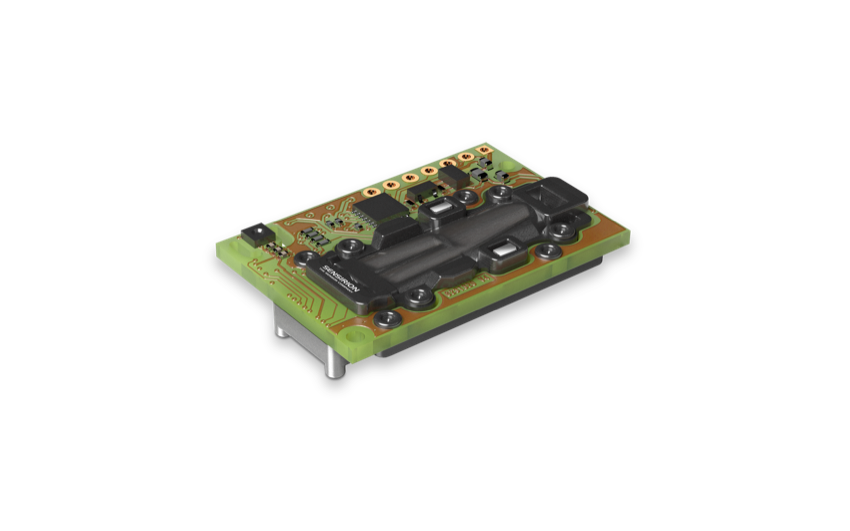
SCD30
- Technology
- NDIR CO₂ module
- Measurement
- 400–10,000 ppm specified range
- Interface
- I²C / UART Modbus / PWM
- Consider for
- Embedded ventilation monitors
- Integration consideration
- Requires carrier electronics, airflow and heat-offset design.
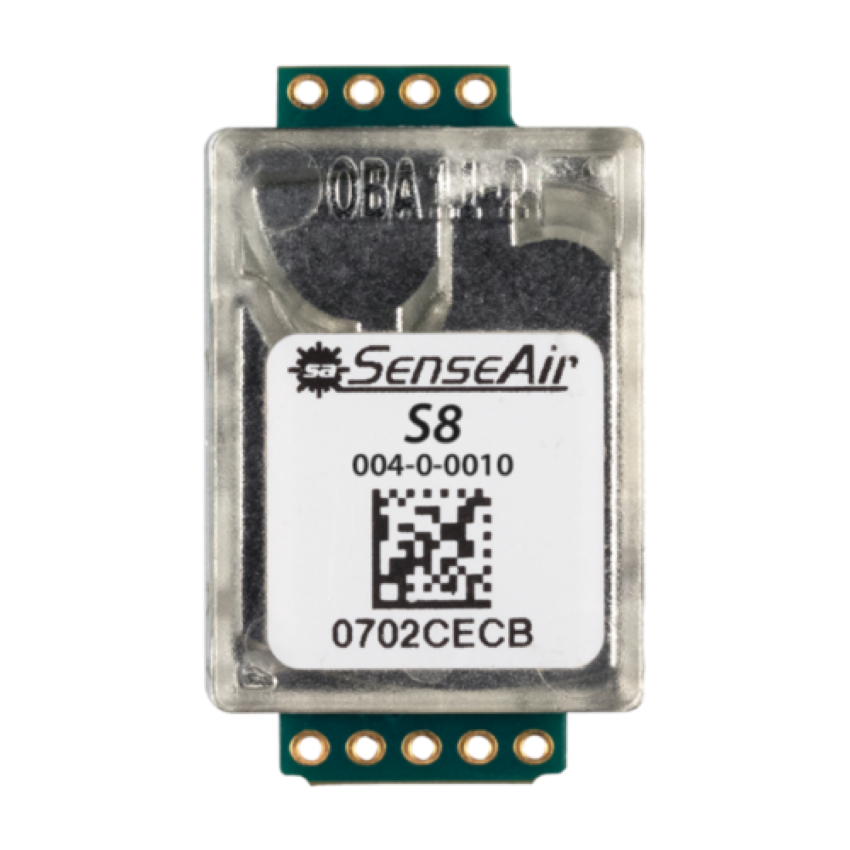
S8 LP
- Technology
- NDIR CO₂ module
- Measurement
- 400–10,000 ppm; article 004-0-0053
- Interface
- UART with Modbus protocol
- Consider for
- Compact CO₂ monitoring
- Integration consideration
- UART is not an RS485 electrical interface. Other S8 variants have different specifications.
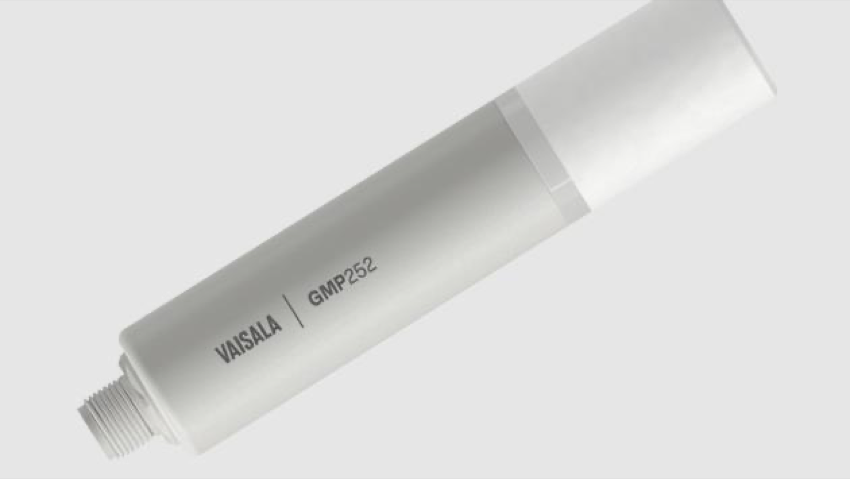
GMP252
- Technology
- Industrial NDIR probe
- Measurement
- 0–10,000 ppm; higher range with reduced accuracy
- Interface
- RS485 / Modbus; analog outputs
- Consider for
- Greenhouses and demanding environments
- Integration consideration
- Confirm ordered output, supply and compensation settings.
The S8 comparison refers to the LP article 004-0-0053. Do not transfer its range or power requirements to other S8 variants. SCD30 interface names describe module-level communication; a Modbus protocol does not by itself imply an RS485 transceiver.
Sensor placement, calibration and wiring.
Place room sensors where they sample representative occupied-zone air, away from a person's direct breath, a supply-air jet, a window or local heat. Keep diffusion paths open. A sealed waterproof box can protect the electronics while preventing the gas from reaching the sensing chamber. Follow the manufacturer's enclosure and airflow instructions.
Allow the specified warm-up time. Check baseline-correction assumptions before enabling them in continuously occupied spaces, greenhouses or rooms with persistent CO₂ sources. Use a documented reference concentration for forced calibration and record the reference conditions. Record pressure-compensation settings and calibration dates.
Before wiring, confirm supply voltage, peak current, logic level, output protocol and cable limitations. For longer runs, an industrial RS485 probe may simplify installation compared with a bare I²C or UART module. In software, retain timestamps, units, error states and calibration history. Use sustained trends and suitable averaging for ventilation analysis.
CO₂ sensor questions.
Can a VOC sensor replace a CO₂ sensor?
No. A VOC sensor's equivalent-CO₂ output is a derived estimate. Select a direct CO₂ sensor when carbon dioxide is the quantity needed.
Does a higher output range mean better accuracy?
No. The reportable range and the range over which accuracy is specified can differ. Check the accuracy statement and its environmental conditions.
Can I use a room sensor as a gas alarm?
Use an alarm instrument approved for the hazard and installation. A room-monitoring component and a complete safety instrument have different requirements.
Read the original documentation.
Specifications use the linked manufacturer documents and their stated revisions. Review the current datasheet and exact ordered variant before final specification. Comparisons use manufacturer specifications and technical documentation.