Channels included in an air-quality module.
An air-quality module combines one or more sensing elements with electronics and defined outputs. The channel list can include CO₂, optical PM estimates, gas indices, humidity, temperature or pressure. Each channel has its own measurement definition and uncertainty.
Select channels according to the intended application. Ventilation assessment may require CO₂ and occupancy context; particle events require PM; material-emission investigations may require a selective gas measurement. A single combined score can conceal the underlying quantities.
Model variants frequently share housings and interfaces while exposing different channels. SEN50, SEN54 and SEN55 are an example. The selected model record must identify the available measurements, firmware and algorithm versions.
Multiple sensing mechanisms in one package.
SEN55 combines optical particulate sensing, metal-oxide gas signals and humidity/temperature measurement. Its VOC and NOx outputs are processed indices. SCD30 supplies an optical CO₂ measurement with additional environmental channels. BME688 combines environmental sensing and gas-response functions with its supported software interpretation.
Combining elements simplifies wiring but does not create chemical selectivity beyond the individual channels. A module's gas-response output needs its documented algorithm; a particle channel needs its own mass model and aerosol evaluation.
Thermal interactions matter in the enclosure. A fan, heater, processor or regulator can alter local temperature and humidity. The measured environment around the sensor may differ from the room unless placement and compensation are validated.
Channel timing can also differ. A device supplying several outputs in one transaction may use different sensing or filtering periods internally. Preserve sampling interval, startup status and validity separately where the protocol exposes them.
Module integration terminology.
- Channel
- A specific reported quantity with its own units and interpretation.
- Variant
- A hardware or product configuration with a defined channel set.
- Gas index
- An algorithm-defined relative output requiring its own interpretation.
- Self-heating
- Local temperature rise caused by the module or nearby electronics.
- Validity state
- A status indicating whether a channel is ready and usable.
- Firmware version
- The software revision relevant to protocol and signal behavior.
Digital environmental sensing and combined nodes.
Sensirion's March 2022 SEN5x datasheet documents a family with common dimensions and differing channel sets. It identifies NOx Index as specific to SEN55, while SEN54 adds humidity, temperature and VOC channels to particulate measurement.
Combined modules reduce some electronics-development work. They also make the output definitions and algorithm documentation central to adoption, because concentration channels and relative indices coexist within the same product.
Air-quality module manufacturer comparisons.
Sensirion SEN55 offers a combined PM/gas-index/environmental node. Bosch BME688 offers compact environmental and gas-response sensing. Sensirion SCD30 provides a CO₂-specific optical route. Compare the actual quantity needed, channel accuracy and enclosure requirements.
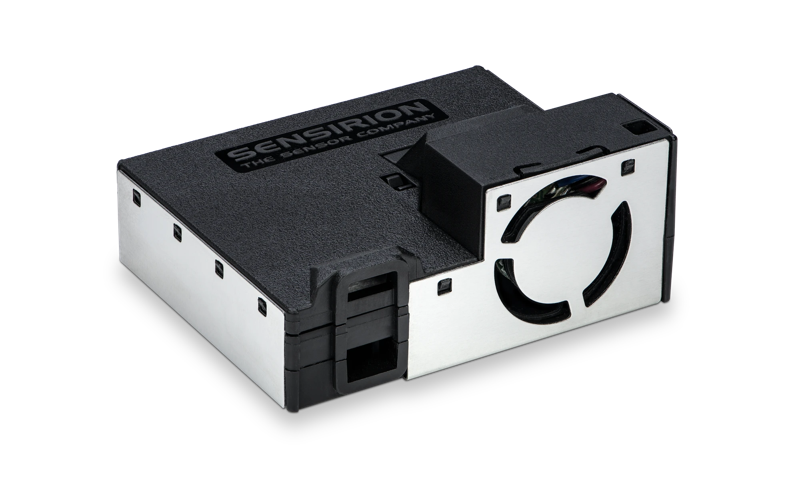
SEN55
- Technology
- Optical particles, metal-oxide gas indices and RH/T module
- Measurement
- PM mass estimates, VOC Index, NOx Index, humidity and temperature
- Interface
- I²C; nominal 5 V supply
- Consider for
- Integrated indoor air-monitoring equipment
- Integration consideration
- VOC and NOx outputs are indices. Enclosure airflow, self-heating and startup affect the measured signals.
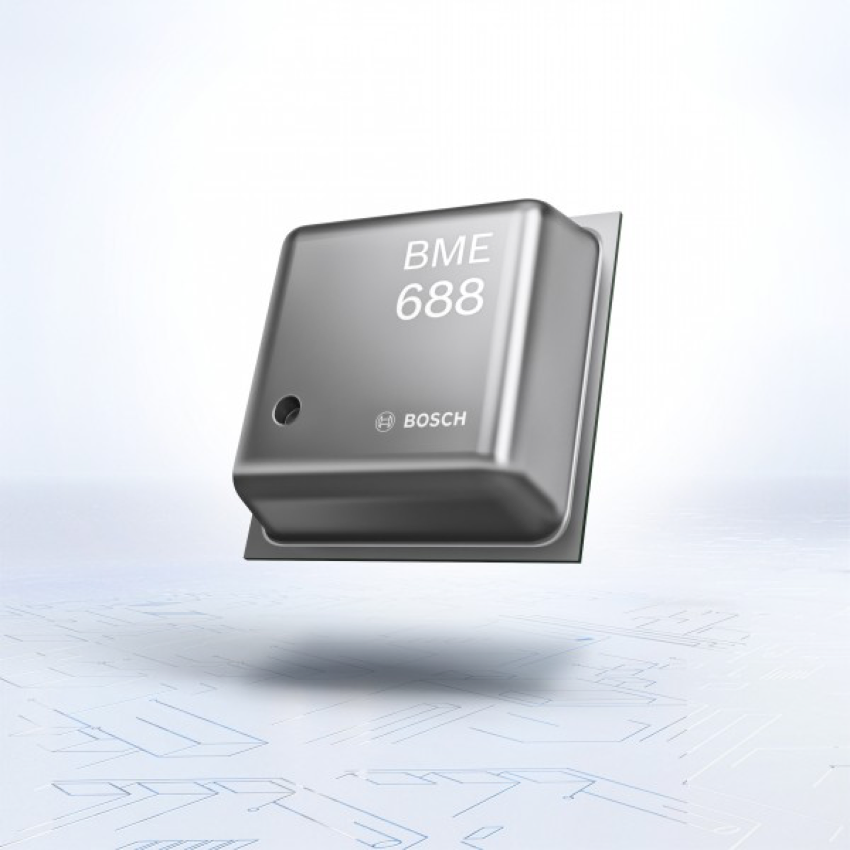
BME688
- Technology
- Gas-resistance and environmental component
- Measurement
- Gas resistance; software-dependent IAQ outputs
- Interface
- I²C / SPI
- Consider for
- Embedded gas-pattern development
- Integration consideration
- Model training and software matter. CO₂-equivalent output is not measured CO₂.
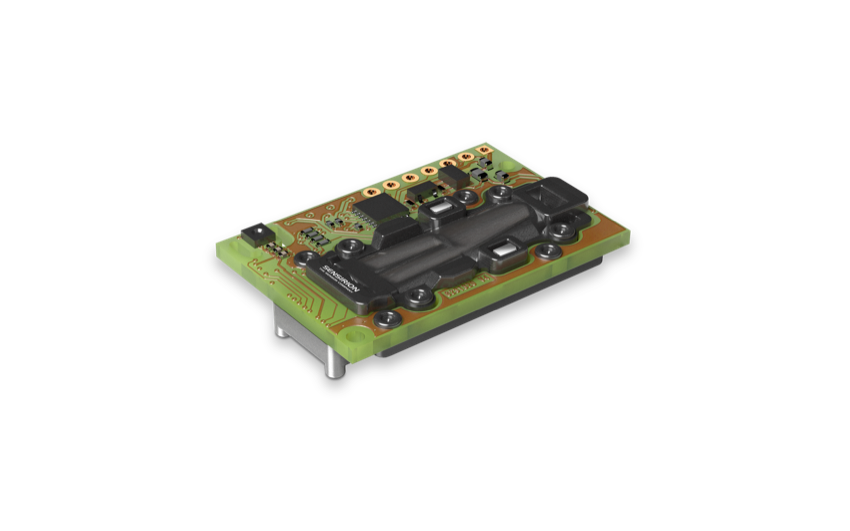
SCD30
- Technology
- NDIR CO₂ module
- Measurement
- 400–10,000 ppm specified range
- Interface
- I²C / UART Modbus / PWM
- Consider for
- Embedded ventilation monitors
- Integration consideration
- Requires carrier electronics, airflow and heat-offset design.
SEN55's VOC and NOx indices cannot be interpreted as compound-specific ppm. BME688 gas interpretation depends on the selected software and validation. SCD30's direct CO₂ channel does not cover particles or all indoor pollutants.
Enclosure airflow, power and channel records.
Design openings for representative gas exchange and the module's inlet/outlet requirements. Prevent air recirculation and separate temperature/humidity sensing from local heat sources. Verify the installed response after enclosure changes.
Size supply and decoupling for startup and heater or fan demand. Match digital signal levels and observe bus length and pull-up requirements. Board-level interfaces may need intermediate electronics for an industrial cable run.
Commission each channel against its appropriate reference or check method. Align timestamps and averaging periods when comparing instruments. Keep calibration, cleaning, algorithm and firmware changes with the measurement history.
Ownership cost includes enclosure design, power, calibration or collocation, software interpretation, replacement access and service. A module with more channels is useful when those channels meet the application requirements and can be maintained coherently.
Air-quality module questions.
Does SEN55 include a CO₂ measurement?
The documented channel set includes PM, VOC Index, NOx Index, humidity and temperature. Add a documented CO₂ sensor if that measurement is required.
Can the same enclosure be used without rechecking temperature?
Heat transfer and airflow affect the installed result. Evaluate temperature offsets and response in the completed enclosure.
How should a gas index be stored?
Retain its index name, algorithm version, timestamp and validity state. Do not relabel it as a gas concentration.
Read the original documentation.
Specifications use the linked manufacturer documents and their stated revisions. Review the current datasheet and exact ordered variant before final specification. Comparisons use manufacturer specifications and technical documentation.