Gas-specific cells and electrode-current outputs.
Electrochemical cells measure gases through electrode reactions. Applications include CO, NO₂, H₂S, chlorine and ammonia, with chemistry and diffusion design selected for the target gas. A bare cell typically supplies a current requiring external electrode control and measurement.
The conversion from current to concentration depends on individual sensitivity, baseline and operating conditions. A nominal range or cell sensitivity is insufficient to establish the accuracy of a completed detector. Gas interference and environmental response remain specific to each model.
Component choice also includes exposure duty, storage, service life and overload recovery. The data sheet should distinguish continuous monitoring from intermittent sampling where that limitation applies.
Electrode arrangements and analog front ends.
A working electrode supports the target reaction and a counter electrode supports the complementary reaction. In three-electrode cells, a reference electrode enables controlled working-electrode potential. Two-electrode designs use a different electrical arrangement and need the prescribed load or readout.
Four-electrode cells add an auxiliary signal used in model-specific baseline treatment. Its correction needs the manufacturer's circuitry and environmental relationship. Cross-sensitivity can remain after auxiliary correction.
A potentiostat controls electrode potential; a transimpedance stage converts current into voltage. For a hypothetical 100 nA signal and a 1 MΩ feedback resistance, the voltage magnitude is 0.10 V. Actual polarity, amplifier headroom, leakage and filtering need circuit-specific assessment.
Some cells require an operating bias. NH3-B1 specifies +200 mV; applying an incompatible circuit can change response or conditioning. Power-down behavior and startup should follow the exact component guidance.
Electrochemical sensor terminology.
- Working electrode
- The electrode supporting the measured target-gas reaction.
- Reference electrode
- The potential reference used by a control circuit.
- Potentiostat
- Circuit maintaining the prescribed electrode potential relationship.
- Transimpedance gain
- The current-to-voltage conversion factor of a readout stage.
- Auxiliary electrode
- An additional signal used for specified baseline correction.
- Zero drift
- Change in baseline over time or operating conditions.
- Span drift
- Change in sensitivity following exposure or aging.
Different electrode counts and integrated variants.
Figaro announced the compact TGS5141 on 10 April 2015, describing an electrolyte arrangement that reduced the need for a water reservoir. The later TGS5141-P00 product documentation supplies the specific circuit and operating requirements used in this comparison.
The manufacturer documents compared here describe a two-electrode CO cell, a four-electrode environmental CO cell and a biased three-electrode ammonia cell. Alphasense's standard and smart-board formats also distinguish cell chemistry from additional identification and temperature electronics.
This development expands integration choices, while calibration and circuit compatibility remain tied to the selected cell. A standard cell should retain its own specification when a related version gains a memory or compensation board.
Electrochemical manufacturer comparisons.
Figaro TGS5141-P00 and Alphasense CO-B4 demonstrate different CO-cell architectures. Alphasense NH3-B1 shows the additional bias requirement for ammonia. They are technology examples for different measurement tasks, with documented electronics requirements.
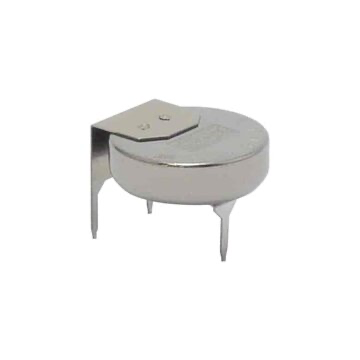
TGS5141-P00
- Technology
- Two-electrode electrochemical CO cell
- Measurement
- Typical detection range 0–5,000 ppm; 1.2–3.2 nA/ppm
- Interface
- Current output; op-amp circuit and power-off protection
- Consider for
- Compact embedded CO detector designs
- Integration consideration
- Continuous operating range −10 to +50 °C; specified humidity 10–95% RH, non-condensing.
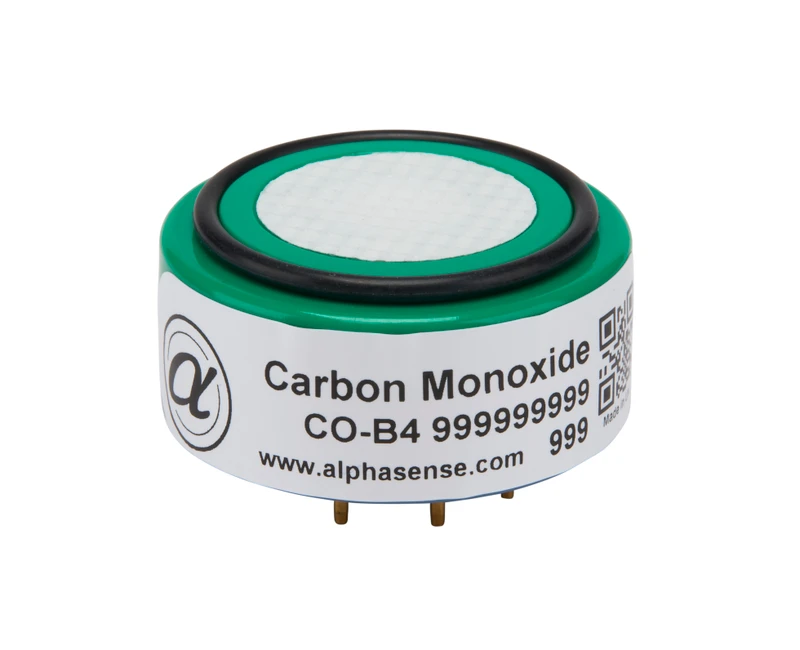
CO-B4
- Technology
- Four-electrode electrochemical CO cell
- Measurement
- 1,000 ppm range limit; sensitivity 420–650 nA/ppm at 2 ppm CO
- Interface
- Analog electrode current; low-noise front end required
- Consider for
- Low-level environmental CO monitoring
- Integration consideration
- Specified noise is measured with Alphasense ISB circuitry. CO-B4+ adds a separate data/temperature board.
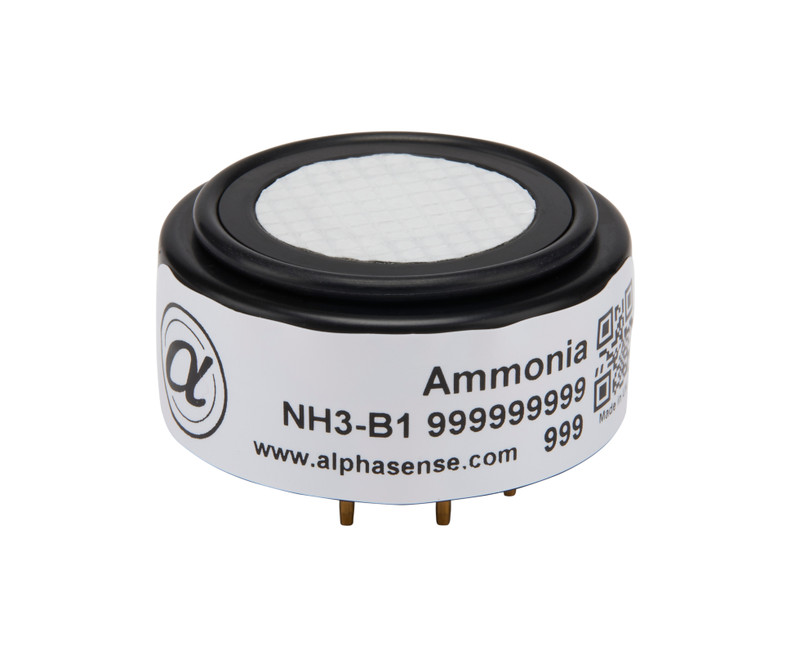
NH3-B1
- Technology
- Three-electrode electrochemical cell
- Measurement
- 100 ppm range; 20–60 nA/ppm at 50 ppm NH₃; T90 <150 s
- Interface
- Biased electrode current; +200 mV operating bias
- Consider for
- Embedded ammonia detection systems
- Integration consideration
- Bias control, conditioning and interference correction require model-specific circuitry.
CO-B4's low-noise figures use a particular front end. TGS5141-P00 requires the manufacturer's power-off protection arrangement. NH3-B1's bias and conditioning cannot be transferred to a CO cell without its own guidance.
Calibration, interference and cell replacement.
Calibrate the assembled instrument using an appropriate zero gas and target-gas span. Record baseline, individual gain, temperature, humidity and calibration date. Determine how environmental corrections are applied and retain the raw or diagnostic signals needed to audit them.
Evaluate interfering gases present in the application. Their responses may be positive or negative relative to the target signal. Preserve that behavior during development and validate corrections under actual gas mixtures.
Minimize leakage and contamination in the low-current circuit. Respect cell handling, storage, load and conditioning guidance. A filtered cell also needs assessment of filter lifetime and the effect of exposure history.
Use an industrial transmitter when the installation needs a documented current loop or serial interface. Bare electrode pins require intermediate circuitry. Include the front end, enclosure, calibration gases, replacement cells and service schedule in total cost. For alarms, evaluate the complete detector and its required certification.
Electrochemical cell questions.
Can electrode current connect directly to a general analog input?
The cell needs the prescribed electrode arrangement and an appropriate low-current front end. A generic voltage input does not supply those functions.
Does a fourth electrode eliminate every interfering gas?
It supports specified baseline treatment. Interference remains dependent on the cell chemistry, filters and operating conditions.
Why does replacement require recalibration?
Individual cell sensitivity and baseline vary. The replacement must be conditioned and calibrated in the completed instrument.
Read the original documentation.
Specifications use the linked manufacturer documents and their stated revisions. Review the current datasheet and exact ordered variant before final specification. Comparisons use manufacturer specifications and technical documentation.