Peroxide vapor, humidity and saturation.
Hydrogen peroxide vapor measurement is used in bio-decontamination processes and disinfection monitoring. The relevant quantities include gas-phase H₂O₂ concentration, temperature and moisture-related saturation. A process concentration measurement requires a different low-range assessment from a residual-vapor measurement during clearance.
Concentration is commonly expressed in ppm by volume. Relative humidity describes water vapor; Vaisala's relative-saturation output accounts for the combined water/peroxide mixture's approach to condensation. The two percentages can differ during peroxide exposure.
Process verification also requires the applicable validation method. A recorded vapor concentration alone cannot establish decontamination efficacy or safe personnel access. Select equipment and procedures for the intended process phase.
Capacitive sensing and electrochemical cells.
Vaisala PEROXCAP uses the response of humidity-sensing elements, including catalytic treatment, to derive peroxide-related quantities. The HPP272 probe combines that sensing with temperature measurement and internal compensation. Its heated sensing arrangement and purge cycle address operation in demanding peroxide environments.
Electrochemical peroxide cells instead produce a gas-related current at an electrode. Membrapor H2O2/CB-2000 requires a +50 mV bias and an external calibrated front end. Its published application is discontinuous measurement.
At a hypothetical calibrated sensitivity of 50 nA/ppm, 500 ppm gives 25,000 nA, equivalent to 25 µA. The specified 0–40 ppm baseline equivalent is especially relevant when attempting a lower-range residual measurement. Range and electronics-dependent resolution cannot establish that application's uncertainty by themselves.
A purge period changes the instrument's operating state and can interrupt valid process measurement. Power design and data acquisition should account for the probe's purge current and reported status. Keep these states identifiable in the recorded process trace.
Peroxide monitoring terminology.
- Relative saturation
- The specified measure of the water/peroxide mixture's proximity to condensation.
- Relative humidity
- Water-vapor pressure relative to water's saturation vapor pressure at the same temperature.
- Chemical purge
- A defined heating sequence intended to remove sensing-element contamination.
- Residual monitoring
- Measurement of lower concentrations after the main process exposure.
- Operating bias
- Electrode potential required for the electrochemical cell.
- Discontinuous exposure
- Measurement intervals separated by suitable recovery or conditioning periods.
Combined process probes and peroxide cells.
The HPP270 documentation distinguishes a basic HPP271 peroxide probe from HPP272, which adds humidity, saturation and temperature quantities. The sensor-family development combines process concentration with information relevant to condensation.
Membrapor's December 2025 H2O2/CB-2000 sheet documents a different route through a biased electrochemical component. The two formats should be assessed against their exposure duty, environmental limits and required process records.
Peroxide manufacturer options.
Vaisala HPP272 provides a completed probe with industrial outputs and additional process quantities. Membrapor supplies a component for a custom sampled instrument. Their conditioning, power and maintenance requirements differ.
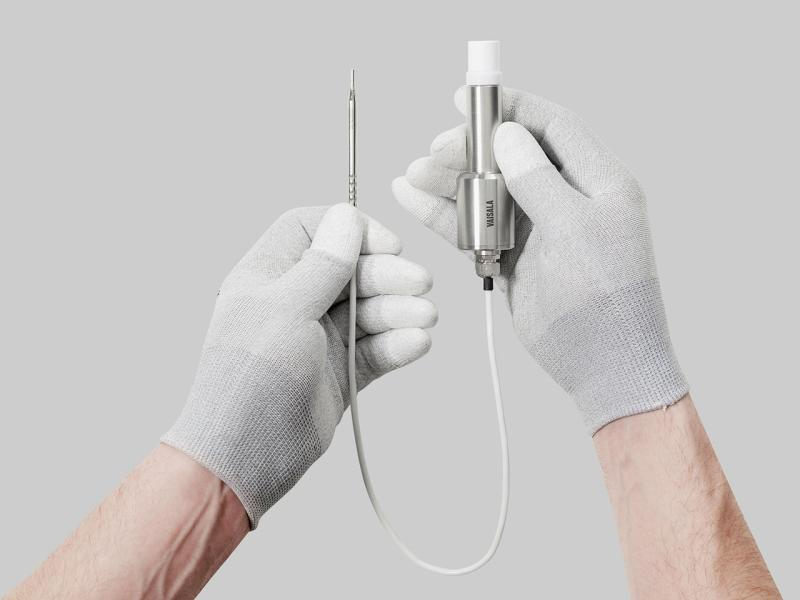
HPP272
- Technology
- PEROXCAP peroxide, humidity and temperature probe
- Measurement
- 0–2,000 ppm H₂O₂; relative saturation, RH and temperature
- Interface
- RS485 Modbus RTU or two 4–20 mA outputs
- Consider for
- Vapor bio-decontamination process monitoring
- Integration consideration
- Peroxide measurement +5 to +50 °C. Account for purge periods and up to 250 mA purge current.
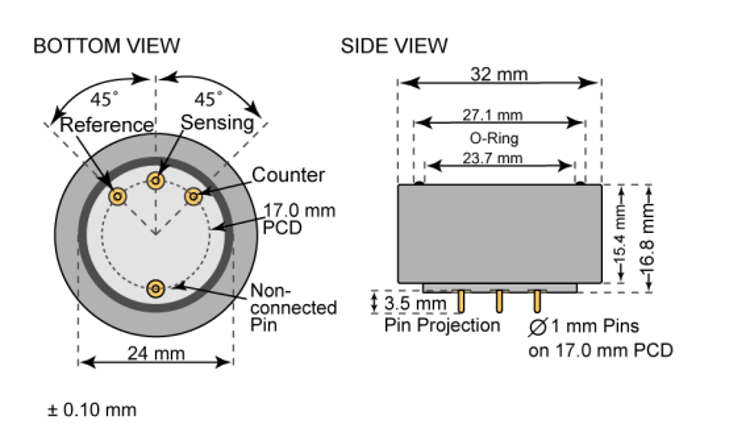
H2O2/CB-2000
- Technology
- Three-electrode electrochemical peroxide cell
- Measurement
- 0–2,000 ppm; 50 ±10 nA/ppm; T90 <60 s
- Interface
- Electrode current; +50 mV bias
- Consider for
- Discontinuous disinfection-process sampling
- Integration consideration
- Baseline equivalent 0–40 ppm. Verify lower-range performance and the specified intermittent exposure duty.
HPP272's peroxide measurement temperature range is +5 to +50 °C, even though the probe has a wider operating-temperature specification. Its T63 response and Membrapor's T90 refer to different endpoints. Retain both definitions when planning process timing.
Condensation, purge states and process records.
Assess sample temperature, surfaces and moisture throughout the process cycle. Condensation and peroxide interaction with the sampling path can change the gas delivered to a sensor. Validate the installed probe or sample line over the expected concentration and environmental range.
HPP272 supplies Modbus RTU over RS485 or two analog current outputs according to configuration. Follow its device-specific bus instructions, including the datasheet's instruction against adding RS485 line termination to this probe. Power design must include purge demand, specified up to 250 mA.
Membrapor's cell needs electrode-bias control, baseline stabilization and span calibration. Confirm that its intermittent exposure duty matches the process. Lower-range clearance measurement may require a separate sensor range and validation approach.
Retain concentration, temperature, saturation, calibration, purge and fault status together. Include calibration service, probe or cell replacement, enclosure, sample handling and interface hardware in ownership cost. Access for inspection and replacement should be part of the installation design.
Peroxide vapor sensing questions.
Why can relative saturation differ from relative humidity?
Relative humidity concerns water vapor. The probe's relative-saturation quantity accounts for peroxide together with water in the mixture.
Can a 2,000 ppm sensor be assumed suitable for residual clearance?
Low-range suitability depends on baseline, uncertainty, interference and the validated procedure. The upper range alone cannot establish it.
What should be logged during a probe purge?
Preserve the purge or invalid-measurement state and its timing. Follow the manufacturer's instructions before treating subsequent readings as valid process data.
Read the original documentation.
Specifications use the linked manufacturer documents and their stated revisions. Review the current datasheet and exact ordered variant before final specification. Comparisons use manufacturer specifications and technical documentation.