Relative humidity and temperature.
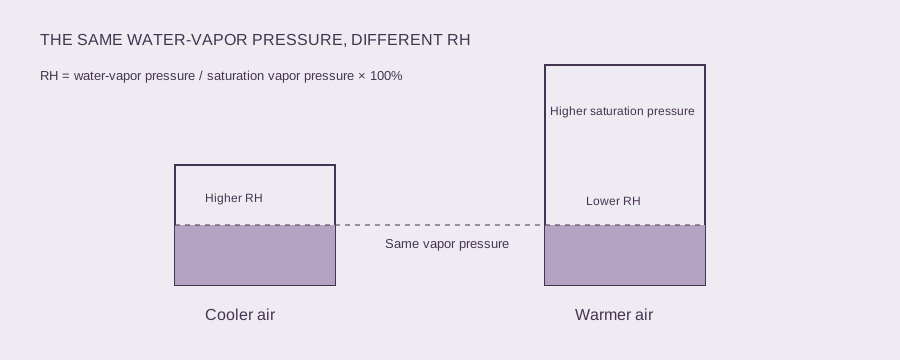
Relative humidity is the ratio of water-vapor pressure to saturation vapor pressure at the same temperature, expressed as a percentage. Saturation vapor pressure changes strongly with temperature. Consequently, warming air can reduce its relative humidity without removing water vapor. Cooling air can raise relative humidity and eventually produce condensation.
Temperature and humidity support room-climate monitoring, storage, greenhouses and interpretation of air-sensor data. The sensing element measures its local environment. Heat from a circuit board or sunlight can make that environment different from the air you intended to measure.
Capacitive humidity and temperature sensing.
Many electronic humidity sensors use a capacitive polymer layer. Water uptake changes the material's dielectric properties, changing capacitance. Electronics and calibration relate that change to relative humidity. Temperature compensation and protection against contamination help maintain a useful response.
Temperature can be measured with several technologies. A resistance temperature detector uses a material's resistance-temperature relationship. Thermistors offer another resistance-based method. Thermocouples generate a voltage related to a temperature difference, and integrated digital sensors use semiconductor behavior. The right choice depends on range, uncertainty, response and installation.
Dew point is the temperature at which the air's water vapor would reach saturation when cooled at the relevant pressure. It can be calculated from paired temperature and RH readings using a stated model, or measured by a dedicated instrument. A calculated value inherits the uncertainty of its input measurements.
Humidity measurement terms.
- % RH
- Relative humidity expressed in percent. A ±2% RH uncertainty means two percentage points, not 2% of the numerical reading.
- Dew point
- The saturation temperature corresponding to the air's water-vapor content. Compare it with surface temperature when investigating condensation.
- Hysteresis
- A difference in sensor response depending on whether humidity was increasing or decreasing.
- Self-heating
- Temperature rise caused by the sensor or nearby electronics. It can affect both temperature and RH observations.
- Resolution
- The smallest reported increment. A display with many decimal places can still have substantial measurement uncertainty.
- Drift
- A change in response over time. Exposure history, contamination and maintenance can influence it.
For example, 50% RH with a ±2% RH specification corresponds to 48–52% RH under the stated test conditions. That statement should not be extended beyond the specified temperature and humidity region.
From weather observations to miniature components.
Psychrometers infer humidity from dry-bulb and wet-bulb temperature behavior. Electronic humidity sensing offered a different route for automated observations. Vaisala introduced its thin-film capacitive HUMICAP technology in 1973, with early use in weather stations followed by radiosondes and industrial instruments.
Modern packages range from tiny surface-mount components to protected, replaceable probes. Integration now includes factory calibration, digital outputs and protective filters. Those conveniences do not remove installation error: radiation, poor airflow and local heat can still dominate an ambient measurement.
Humidity and temperature sensor manufacturers.
SHT45 prioritizes compact humidity and temperature integration. HMP110 provides a housed probe with a detachable cable and configurable outputs. BME280 adds pressure sensing in an embedded component. Choose the integration level and measurement set before comparing headline accuracy.
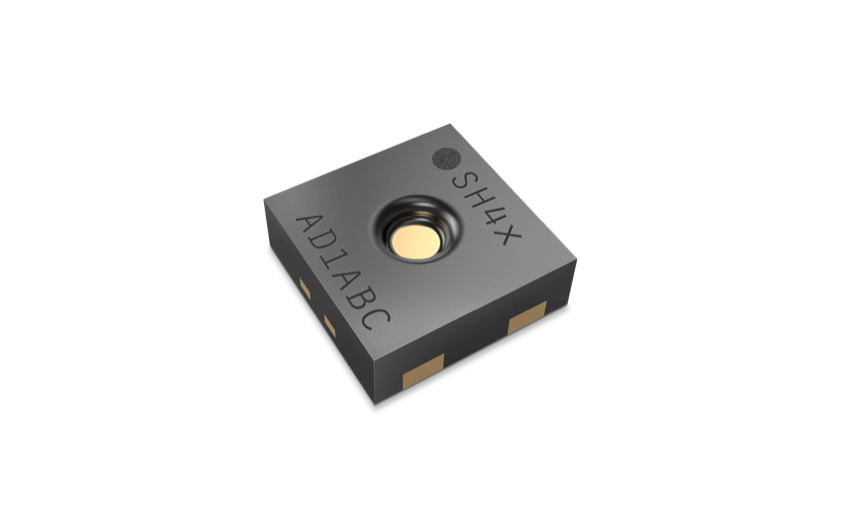
SHT45
- Technology
- Digital humidity / temperature component
- Measurement
- Typical ±1% RH and ±0.1 °C; see conditions
- Interface
- I²C
- Consider for
- Compact ambient sensing
- Integration consideration
- Typical accuracy is not guaranteed across the full operating range. Keep away from board heat.
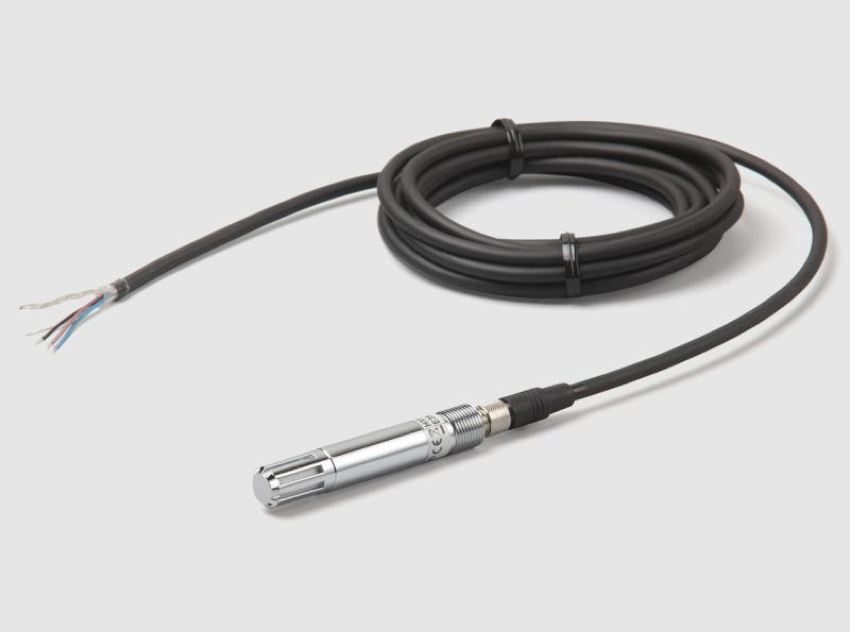
HMP110
- Technology
- Humidity / temperature probe
- Measurement
- 0–100% RH; −40 to +80 °C operating range
- Interface
- Voltage outputs; optional RS485
- Consider for
- Industrial ambient monitoring
- Integration consideration
- Confirm model protocol. Do not assume HMP110T temperature-only options apply to all variants.
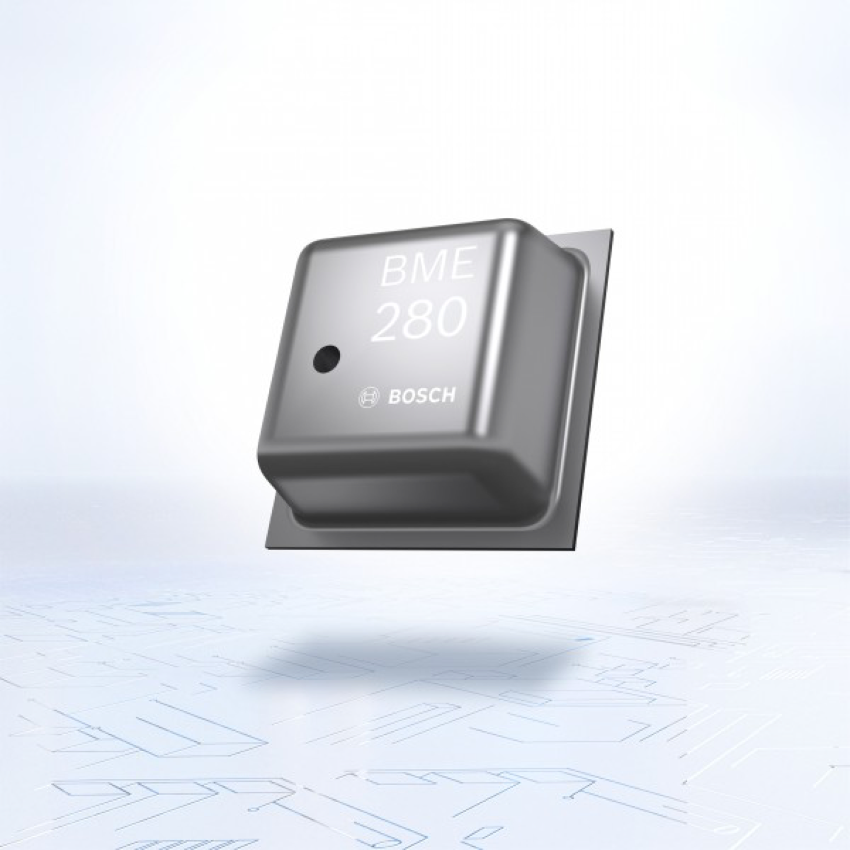
BME280
- Technology
- Humidity / pressure / temperature component
- Measurement
- Humidity tolerance ±3% RH under specified conditions
- Interface
- I²C / SPI
- Consider for
- Compact multi-quantity sensing
- Integration consideration
- Protect the sensing opening and separate the package from heat sources.
SHT45 values are typical accuracy figures from the manufacturer's catalogue, not a full-range guarantee. HMP110 variants and output options must be checked at ordering. BME280's pressure channel is an additional quantity, not evidence of better humidity performance.
Placement, shielding and calibration.
Place the sensor away from power regulators, processors, walls warmed by sunlight and HVAC outlets unless those are the specific locations being studied. Use a permeable protective filter appropriate to the expected dust and chemical exposure. A filter adds response lag; it does not make a condensation-sensitive component immune to liquid water.
Outdoors, shield the element from solar radiation and precipitation while allowing ventilation. Record installation height, shield type and nearby surfaces. Indoors, compare several candidate positions before selecting a permanent one. During checks, allow the sensor and reference to stabilize in the same environment.
Define calibration intervals from the application, exposure and required uncertainty. Retain calibration certificates and any correction applied. Store temperature and RH together with consistent timestamps. If calculating dew point, identify the equation used and handle invalid or out-of-range readings explicitly. Temperature/RH context is especially useful beside optical PM and gas sensors.
Humidity and temperature sensor questions.
Why does RH fall when the room warms up?
Saturation vapor pressure increases with temperature. If water-vapor pressure stays approximately constant, its ratio to saturation decreases.
Is a chip's temperature the room temperature?
Only when its thermal environment represents the room air. Board heat, radiation and enclosure airflow can introduce a difference.
Can a humidity sensor predict condensation?
Paired temperature and RH can estimate dew point. You also need the relevant surface temperature to assess whether that surface may reach saturation.
Read the original documentation.
Specifications use the linked manufacturer documents and their stated revisions. Review the current datasheet and exact ordered variant before final specification. Comparisons use manufacturer specifications and technical documentation.