Hydrogen leaks, concentration surveys and process measurements.
Hydrogen sensing supports fuel handling, battery installations, industrial processes and leak investigations. Measurement requirements depend on the expected release, ventilation, concentration range and response time. A survey of small losses can need substantially different sensitivity from an instrument intended to detect a larger release.
Concentration is commonly expressed in ppm by volume or percent volume. One percent volume equals 10,000 ppm. Combustible-gas instruments may report percent LEL, which requires the instrument's declared hydrogen reference and calibration. A reading calibrated for another combustible gas needs the manufacturer's documented response treatment before use with hydrogen.
Hydrogen has different optical behavior from methane in conventional infrared gas detection. The methane NDIR modules discussed in the methane guide therefore cannot be assigned hydrogen measurement capability. Hydrogen systems use technologies selected for hydrogen response, including electrochemical and semiconductor methods.
Electrochemical current and semiconductor resistance.
An electrochemical hydrogen cell produces a current related to gas arriving at its working electrode. The cell's diffusion geometry, electrode chemistry and any filter determine sensitivity and interference. Membrapor H2/CA-1000 includes a carbon-monoxide-removal filter; filter capacity and actual gas composition still need consideration.
With a hypothetical calibrated sensitivity of 28 nA/ppm, 100 ppm produces 2,800 nA, equivalent to 2.8 µA. The instrument subtracts the measured baseline and applies its calibrated gain. The nominal sensitivity is an input to circuit design; individual calibration determines the supplied cell's conversion.
Membrapor's August 2026 sheet states that sensitivity loss greater than 10% occurs in the first month after production before stabilization. Conditioning history and subsequent calibration therefore matter. Calibration planning should establish the delivered cell's state and follow manufacturer guidance on stabilization and rechecking.
Semiconductor hydrogen sensors change resistance after gas interacts with a sensitive surface. The signal direction depends on the material. Tin-oxide TGS821 becomes more conductive in hydrogen. Aeroqual describes its p-type GSS hydrogen technology as increasing resistance with hydrogen. Electronics and algorithms must follow the specific sensor behavior.
Heated semiconductor components require controlled heater power and a calibrated nonlinear response function. A complete head combines sensing and signal processing for a specified host. Resolution, minimum detection limit and accuracy are properties of that documented measurement arrangement.
Hydrogen sensor terminology.
- Gas-specific calibration
- Calibration relating response to hydrogen under a defined mixture and concentration.
- Electrode sensitivity
- Current change per ppm, with test conditions and expected model variation.
- Initial aging
- Early sensitivity change after manufacture, requiring conditioning and calibration planning.
- Removal filter
- Material intended to reduce an interfering gas before it reaches the sensing element.
- Metal-oxide semiconductor
- A sensing material whose electrical behavior changes through surface interaction with gases.
- Minimum detection limit
- A model-specific specification for detectable concentration under stated conditions.
- Recovery
- Return toward baseline after exposure is removed.
- Host compatibility
- Requirement to use a sensor head with the specified instrument and supported outputs.
Hydrogen detection and measurement development.
Figaro's semiconductor lineage dates to Taguchi's commercial gas-sensor development in 1968. The company's public TGS821 sheet carries REV 10/04; its current industrial-safety catalog includes the model with a typical hydrogen detection range. These sources describe a long-standing sensing approach without establishing current stock or a product launch date.
The US Department of Energy's discussion of advanced hydrogen leak detection separates requirements for larger safety-related releases from the measurement of smaller losses. That distinction informs measurement design: response time, detection limit, selectivity and measurement coverage need to match the installation's intended use.
Hydrogen manufacturer and model options.
Membrapor H2/CA-1000 provides an electrochemical component. Figaro TGS821 provides a heated semiconductor component. Aeroqual HA provides a hydrogen-responsive head for compatible instruments. Their integration effort, power requirements and calibration arrangements differ.
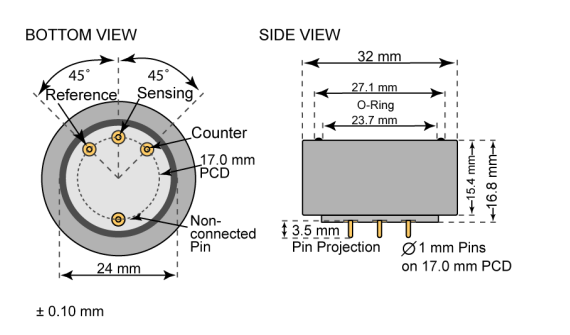
H2/CA-1000
- Technology
- Three-electrode electrochemical cell
- Measurement
- 0–1,000 ppm; 28 ±11 nA/ppm; T90 <40 s
- Interface
- Electrode current; calibrated analog front end
- Consider for
- Lower-range hydrogen measurements
- Integration consideration
- CO-removal filter fitted. August 2026 sheet notes initial sensitivity loss greater than 10% during the first month after production.
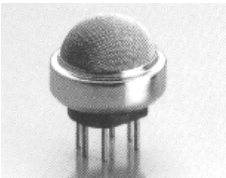
TGS821
- Technology
- Heated metal-oxide semiconductor
- Measurement
- Current catalog: typical 30–1,000 ppm hydrogen range
- Interface
- Resistance readout; 5 V heater
- Consider for
- Hydrogen-responsive embedded equipment
- Integration consideration
- About 660 mW heater consumption. Legacy REV 10/04 sheet describes response down to 50 ppm; this is not a specified instrument detection limit.
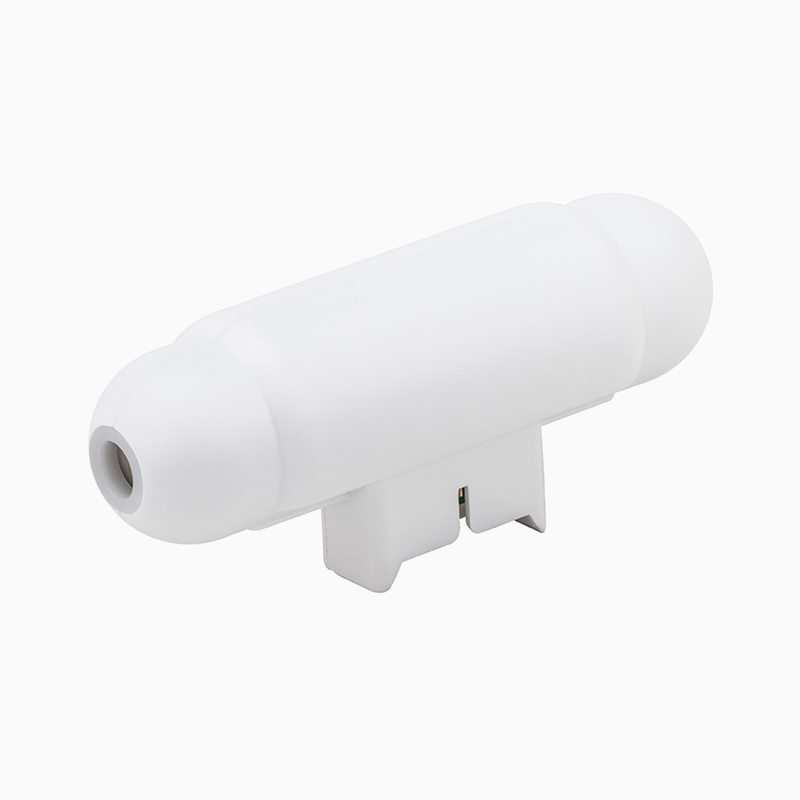
HA
- Technology
- Gas-sensitive semiconductor head
- Measurement
- 0–5,000 ppm; stated minimum detection limit 5 ppm
- Interface
- Compatible Aeroqual host required
- Consider for
- Portable hydrogen surveys
- Integration consideration
- Specified operation 0–40 °C, 10–90% RH. Host configuration determines available data outputs.
Figaro's current catalog lists a typical 30–1,000 ppm range for TGS821, while the legacy product sheet describes detection down to 50 ppm in its prose. Neither statement establishes the detection limit of a newly assembled instrument. Aeroqual specifies HA's minimum detection limit separately from its 1 ppm display resolution.
Leak geometry, calibration and data acquisition.
Assess release points, ventilation, enclosed volumes and locations where gas may accumulate. Hydrogen buoyancy is relevant, but placement also depends on airflow and installation geometry. Validate representative exposure at the selected location rather than relying on a concentration measured elsewhere.
Confirm the sensor's response to gases present in the application. Carbon monoxide and other reducing gases can affect particular electrochemical or semiconductor models. Filter descriptions need their model and operating scope. A mixed-gas evaluation should preserve both positive and negative interference possibilities.
Specify conditioning, zero and span calibration, functional checks and replacement criteria. Record temperature, humidity, baseline, gain and calibration history with measured concentrations. H2/CA-1000's initial sensitivity change should be included in commissioning and early maintenance.
Electrochemical cells require controlled electrode circuitry and current measurement. TGS821 requires a heater supply and resistance readout, with its published power and conditioning requirements. Aeroqual HA requires a compatible host; available industrial or network outputs depend on the selected instrument configuration.
Compare complete installed systems, including enclosure, power, calibration gas, interface electronics and service. Safety functions require suitable instruments and alarm design for the installation. A monitoring dataset should retain sensor faults, startup states and overrange conditions so those periods can be distinguished during analysis.
Hydrogen sensing questions.
Can a methane infrared sensor measure hydrogen?
Conventional methane NDIR measurement relies on methane absorption. It does not provide hydrogen concentration without a separate documented hydrogen sensing capability.
Why do hydrogen semiconductor sensors have different response directions?
Gas interaction affects electrical conduction according to the sensing material. Figaro describes increased conductivity for TGS821; Aeroqual describes increased resistance for its p-type GSS technology.
When should a newly manufactured electrochemical cell be calibrated?
Follow the exact model's conditioning guidance and establish its delivered state. H2/CA-1000 documents substantial initial sensitivity change, which affects commissioning and early rechecks.
Is a 1 ppm display increment equivalent to detecting 1 ppm hydrogen?
Display resolution and detection limit are separate specifications. Aeroqual HA lists a 1 ppm increment and a 5 ppm minimum detection limit.
Read the original documentation.
Specifications use the linked manufacturer documents and their stated revisions. Review the current datasheet and exact ordered variant before final specification. Comparisons use manufacturer specifications and technical documentation.