Methane concentration and combustible-gas measurements.
Methane sensors are used in gas-leak detection, biogas systems, mining and process analysis. The measurement may represent a low concentration in air, a fraction of the lower explosive limit or a substantial percentage of a process stream. Range selection and sensing technology depend on the intended gas mixture and operating environment.
One percent by volume corresponds to 10,000 ppm by volume. Percent LEL refers to a fraction of the lower explosive limit adopted by the instrument's calibration convention. For a worked example that assumes a 5% volume methane LEL reference, 1% volume corresponds to 20% LEL. The declared reference must accompany the conversion; instruments and standards can use different conventions.
Combustible-gas alarms need equipment suitable for the application, gas mixture and hazardous location. A component's approval does not establish approval of the assembled measurement or alarm system. Document range, fault behavior and any conditions that affect sensitivity.
Infrared absorption, catalytic oxidation and semiconductor response.
Non-dispersive infrared sensors measure absorption in a wavelength band associated with methane. Optical and electronic compensation relate the signal to gas concentration. Dynament integrates optics, electronics and firmware in its Platinum Series module. The selected gas configuration determines range and output interpretation.
A catalytic pellistor uses a heated active element and a reference element. Combustible gas oxidizes at the catalyst, heating the active element and changing the bridge output. Oxygen is needed for this reaction. Oxygen-poor process streams therefore require a technology and measurement configuration suitable for that atmosphere.
Catalytic response extends to other combustible gases, and catalyst poisoning or inhibition can suppress sensitivity. Silicones and sulfur-containing contaminants are important considerations in application assessment. A zero reading after exposure cannot establish that the catalyst remains responsive; a documented gas challenge is needed.
Heated metal-oxide sensors use a gas-dependent resistance change. Figaro TGS2611-E00 includes a filter to reduce selected interferences. Calibration maps its nonlinear resistance response into concentration over a defined range. Filter performance, humidity and gas mixtures remain part of the measurement specification.
Methane measurement terminology.
- Volume percent
- Gas volume fraction multiplied by 100; 1% equals 10,000 ppm.
- Percent LEL
- Concentration expressed relative to the instrument's declared lower-explosive-limit reference.
- Pellistor
- A heated catalytic element used to detect combustible gases through oxidation heat.
- Catalyst poisoning
- Loss of catalytic activity after exposure to particular contaminants.
- NDIR
- Non-dispersive infrared measurement using selected absorption bands.
- Cross-response
- Signal caused by another gas, relevant to both combustible and selective concentration measurements.
- Range configuration
- The ordered gas and concentration range used by the sensor firmware and calibration.
- Functional gas challenge
- A defined gas exposure used to verify that an instrument responds.
Combustible-gas sensing and installation research.
Figaro traces commercial tin-oxide gas-sensor development to 1968. Modern filtered semiconductor components are part of that technology's later development, alongside catalytic and infrared approaches.
NIOSH's April 2010 publication, Guidelines for the Control and Monitoring of Methane Gas on Continuous Mining Operations, examines methane control and monitoring in underground coal mining. Its placement and response findings concern that operating context. It provides a useful example of the need to assess sensor position together with airflow and gas sources; it does not validate the components compared below for mine deployment.
Methane manufacturer and model options.
Alphasense CH-A3 represents catalytic combustible sensing. Figaro TGS2611-E00 offers a filtered semiconductor component. Dynament's methane-configured Platinum module offers calibrated infrared measurement and a logic-level serial interface. Their outputs require different electronics and calibration handling.
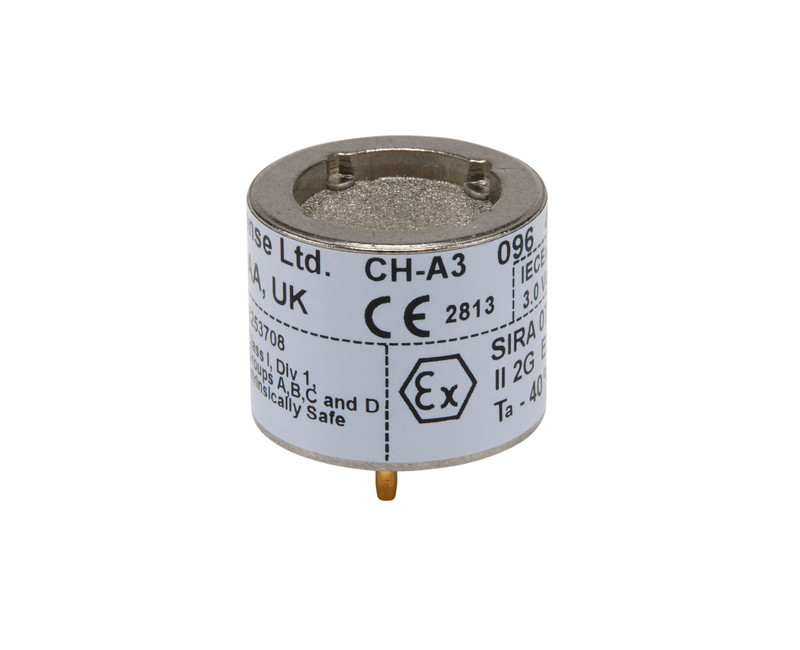
CH-A3
- Technology
- Catalytic pellistor
- Measurement
- 0–100% LEL methane; 15–22 mV per % volume CH₄
- Interface
- Active/reference bridge; 3.0 ±0.2 V supply
- Consider for
- Combustible-gas instrument designs
- Integration consideration
- Requires oxygen for oxidation and responds to other combustibles. Catalyst poisoning and certification scope matter.
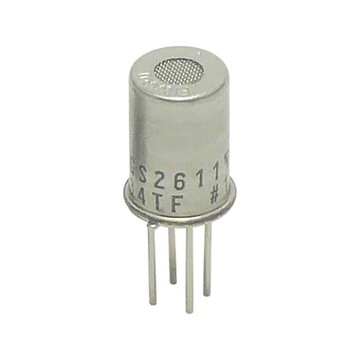
TGS2611-E00
- Technology
- Filtered metal-oxide semiconductor
- Measurement
- Typical methane detection range 1–25% LEL
- Interface
- Resistance readout; separate 5 V heater circuit
- Consider for
- Compact methane-responsive designs
- Integration consideration
- Heater power 280 ±25 mW. Filter reduces selected interferences; conversion depends on calibration and LEL reference.
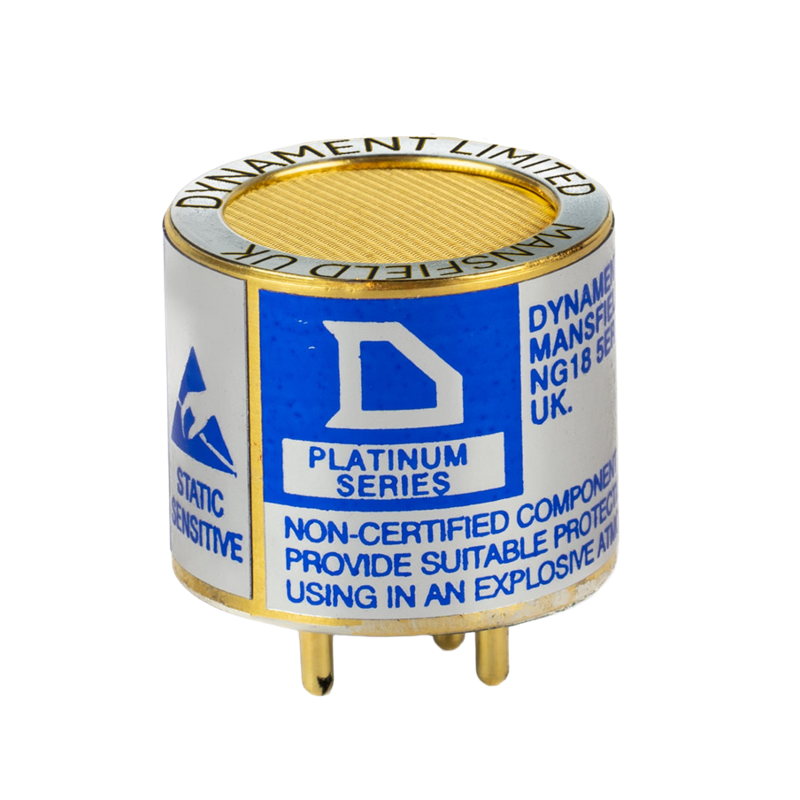
Platinum Series, methane configuration
- Technology
- Non-dispersive infrared module
- Measurement
- Selected 0–5% volume CH₄ option; 0.01% volume resolution
- Interface
- 2.8 V logic serial; 3–5 V supply
- Consider for
- Digital methane concentration measurement
- Integration consideration
- Gas ranges and power modes are ordered configurations. Level conversion and protocol handling are required.
CH-A3 sensitivity is expressed in mV per percent volume methane while its measurement range is expressed in percent LEL. Retain both units when implementing conversion. Dynament offers multiple methane ranges and power modes; this comparison selects the 0–5% volume configuration without assigning the lowest series power figure to every version.
Placement, gas mixture and digital acquisition.
Assess likely leakage points, enclosure geometry, ventilation and access for gas checks. Methane buoyancy influences dispersion, but airflow and installation geometry can dominate local concentration. A sample line introduces transport delay that must be measured with the assembled instrument.
Confirm the presence of oxygen where a catalytic sensor is used. Assess poisons and interfering combustibles. For biogas analysis, specify how humidity, carbon dioxide, sulfur compounds and pressure will be handled. A diluted sample requires a documented dilution ratio and uncertainty.
Calibrate with the prescribed gas mixture and concentration, then verify response throughout the intended measurement range. Store the LEL reference, range configuration, calibration date and fault flags. An overrange condition should remain identifiable in the recorded data rather than being reduced to an ordinary maximum value.
CH-A3 needs bridge excitation and signal measurement; TGS2611-E00 needs a heater supply and resistance readout. Dynament specifies 2.8 V logic serial with defined serial settings. Connecting it to industrial data acquisition requires compatible voltage levels and implementation of its protocol. A complete RS485 or current-loop transmitter provides a different integration level and needs its own specification.
Installed-cost comparisons should include certified enclosure requirements where applicable, power, calibration accessories, replacement sensors and service. Request quotations for the actual gas range and output configuration; series-level descriptions cannot establish the delivered package.
Methane sensing questions.
How is methane ppm converted into percent LEL?
Convert ppm to volume percent, then divide by the declared LEL volume-percent reference and multiply by 100. Record that reference with the result.
Can a pellistor measure methane in an oxygen-poor stream?
Catalytic oxidation requires oxygen. Select a measurement approach and gas-handling configuration approved for the actual stream.
Does a methane pellistor respond to other fuel gases?
It can respond to other combustibles. A mixed-gas signal requires the manufacturer's response information and an appropriate calibration strategy.
Can the Dynament module connect directly to RS485?
The documented module output is logic-level serial. An appropriate interface stage and protocol implementation are required for an RS485 system.
Read the original documentation.
Specifications use the linked manufacturer documents and their stated revisions. Review the current datasheet and exact ordered variant before final specification. Comparisons use manufacturer specifications and technical documentation.