Hydrogen sulfide concentration in air and process samples.
Hydrogen sulfide monitoring supports wastewater treatment, biogas analysis and investigations of sulfur-containing emissions. The required concentration range differs considerably between an ambient survey, a workplace detector and a process-gas analyzer. A low-range instrument can resolve small changes while reaching overload in a concentrated sample.
Gas-phase H₂S concentration is commonly expressed in parts per million by volume, with parts per billion used for lower concentrations. Record the measurement location, averaging interval and sample treatment alongside the value. A dried or diluted process sample represents the gas after that treatment; relating it to the original stream requires the appropriate corrections.
H₂S can present a serious exposure hazard. OSHA describes the unreliability of odor as a warning because the sense of smell can become fatigued. Personnel protection requires suitable gas-detection equipment, documented checks and site procedures. An experimental sensing assembly needs separate evaluation before serving an alarm function.
Electrode reactions and low-current measurement.
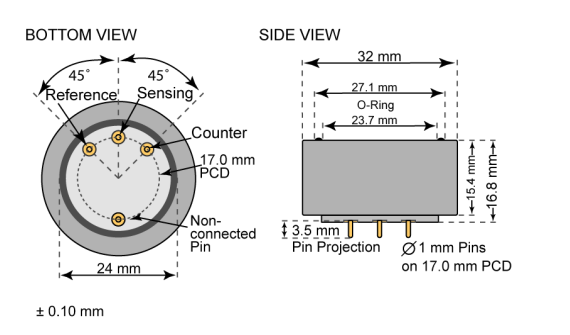
In an electrochemical cell, gas passes through a diffusion barrier and reacts at the working electrode. A counter electrode supports the complementary reaction; a reference electrode permits controlled working-electrode potential. The resulting current is related to concentration through the cell's calibrated sensitivity.
Four-electrode designs add an auxiliary signal that can help account for baseline changes. The correction depends on the manufacturer's recommended circuitry and temperature treatment. A fourth electrode cannot automatically cancel every interfering gas or compensate for an unsuitable sample path.
For a hypothetical calibrated sensitivity of 2,000 nA/ppm, a concentration of 0.050 ppm produces a gas-related current of 100 nA. The readout must separate this small signal from baseline current, electrical leakage and drift. A datasheet noise figure measured with a specific front end describes that measurement configuration.
Complete sensor heads combine the sensing element with electronics and calibration. Their detection limits and displayed resolution describe an assembled product under stated conditions. A bare-cell sensitivity alone provides insufficient information to calculate the uncertainty of a finished instrument.
Hydrogen sulfide measurement terminology.
- ppm and ppb
- Volume-fraction units. One ppm corresponds to 1,000 ppb.
- Sensitivity
- Change in electrode current per concentration unit, usually nA/ppm for the cells compared here.
- Baseline
- Output in a defined zero-gas condition. Temperature and cell history can shift it.
- T90
- Time to reach 90% of the final response after a specified concentration step.
- Cross-sensitivity
- Response to another gas, expressed with the manufacturer's test concentration and conditions.
- Discontinuous sampling
- Exposure in measurement intervals, typically separated by conditioning or recovery periods.
- Overload
- Exposure beyond the specified range. Recovery and subsequent calibration need assessment.
- Sample conditioning
- Treatment such as filtration, drying or dilution that can change gas composition and response time.
Development of H₂S detection systems.
OSHA's H₂S guidance reflects established industrial monitoring practice in operations where the gas can accumulate, including wastewater and oil-and-gas work. The Alphasense H2S-B4 datasheet carries a February 2024 revision. That document and the other manufacturer sources show how this measurement now spans compact multi-electrode cells, gas-tight process-sampling cells and portable calibrated heads.
Those formats address different engineering needs. Alphasense documents a low-noise four-electrode configuration; Membrapor emphasizes discontinuous biogas measurement for H2S/CG-100; Aeroqual supplies an instrument-compatible head for a lower concentration range. Application, output and measurement conditions remain specific to each model.
H₂S manufacturer and model options.
Alphasense, Membrapor and Aeroqual offer three different integration levels. The cells require an analog measurement system and individual calibration. The Aeroqual head requires a compatible host. Procurement should specify the exact model, calibration gas, required range and replacement arrangements.
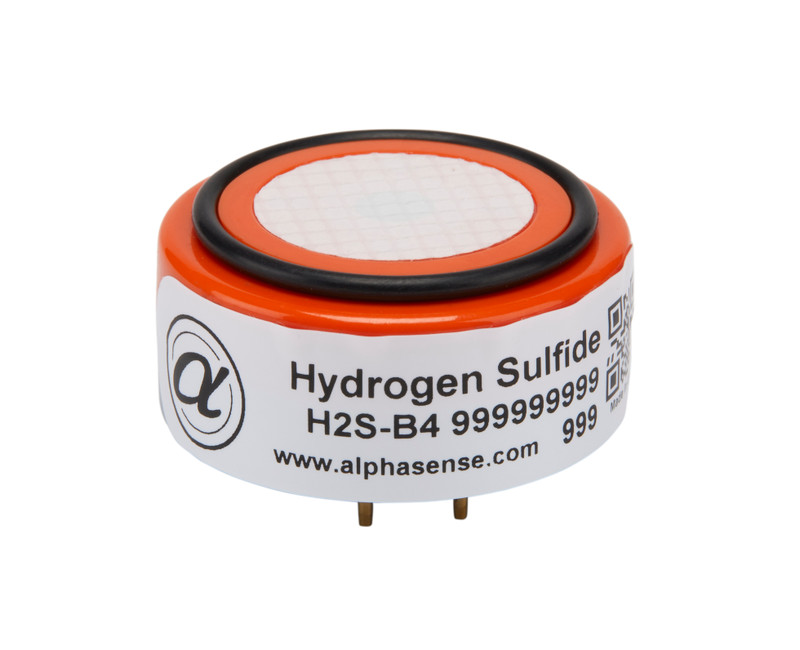
H2S-B4
- Technology
- Four-electrode electrochemical cell
- Measurement
- 100 ppm performance-warranty range; 1,450–2,600 nA/ppm at 2 ppm H₂S
- Interface
- Electrode current; low-noise analog front end
- Consider for
- Low-level environmental H₂S measurement
- Integration consideration
- Noise specification assumes Alphasense ISB circuitry. H2S-B4+ has additional electronics.
H2S/CG-100
- Technology
- Three-electrode electrochemical cell
- Measurement
- 0–100 ppm nominal; 550 ±110 nA/ppm; T90 <30 s
- Interface
- Electrode current; potentiostat and calibration required
- Consider for
- Discontinuous biogas sampling
- Integration consideration
- Specified for discontinuous measurement. Sample conditioning and interfering gases require assessment.
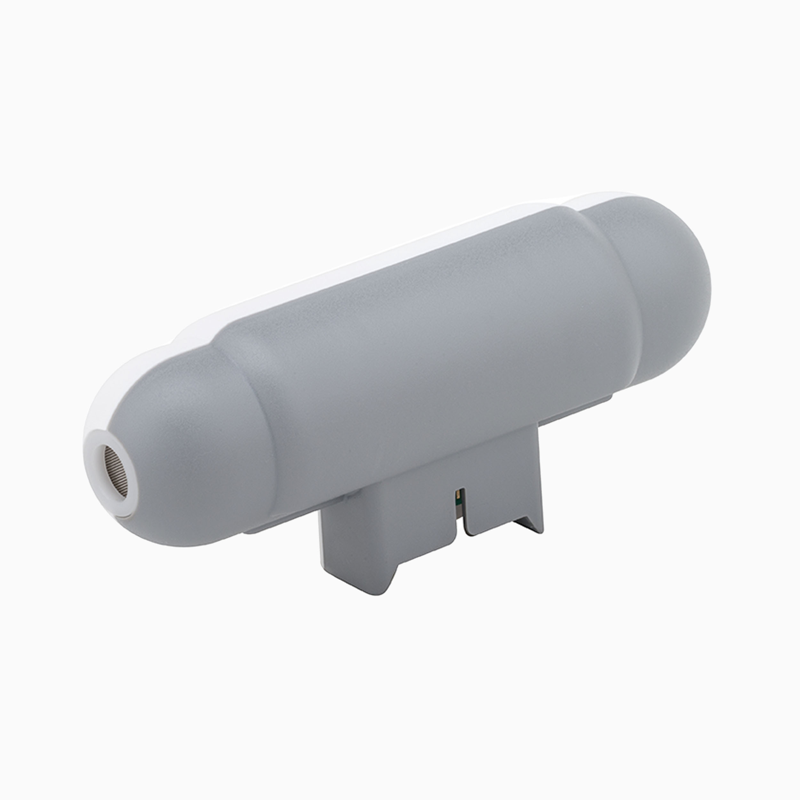
EHS / EHS2
- Technology
- Electrochemical sensor head
- Measurement
- 0–10 ppm; stated minimum detection limit 0.04 ppm
- Interface
- Compatible Aeroqual host required
- Consider for
- Portable low-range H₂S surveys
- Integration consideration
- Factory accuracy is concentration-dependent. Confirm head compatibility and host output configuration.
The Alphasense range is the limit of its performance warranty. Membrapor's sensitivity and response specifications use stated laboratory conditions. Aeroqual lists a 0.01 ppm display increment and a 0.04 ppm minimum detection limit; these separate specifications should remain distinct in the instrument record.
Sampling, calibration and instrument integration.
Locate the sampling point according to likely sources, ventilation and the purpose of measurement. Gas density alone is insufficient to determine placement in a ventilated or turbulent space. For pumped systems, characterize the complete inlet, tubing, filter, flow and cell arrangement with a concentration step. The assembled response includes transport delay.
Water, deposits and reactive surfaces can affect sample delivery. Select materials and moisture handling for the actual stream, and verify recovery after high concentrations. A biogas installation also needs assessment of methane, carbon dioxide and other constituents that may interfere or create separate hazards.
Use a documented zero and span procedure with traceable gas of an appropriate concentration. Record calibration date, cylinder information, temperature, humidity, flow and baseline correction. A functional gas challenge checks response; a quantitative calibration establishes the relationship between signal and concentration.
Raw cells need appropriate electrode control, current conversion, filtering and temperature measurement. A completed transmitter may provide voltage, current-loop or digital outputs, but those interfaces depend on the transmitter specification. Include supply, enclosure, pump, calibration accessories, replacement cells and service in the installed-cost comparison. Log sensor faults and overrange states alongside concentration.
Hydrogen sulfide sensing questions.
Can H₂S odor indicate whether an area is safe?
Odor is unreliable for this purpose. OSHA notes olfactory fatigue; suitable detection equipment and established exposure-control procedures are required.
Is H2S/CG-100 intended for continuous biogas exposure?
Its datasheet specifies discontinuous measurement. Continuous duty requires confirmation of a suitable model and sampling arrangement with the manufacturer.
Can a four-electrode cell remove all interference?
The auxiliary electrode supports baseline treatment. Gas cross-response, temperature behavior and filter limitations still require model-specific evaluation.
How should a low-range head be used with a concentrated sample?
Establish a validated dilution or alternative sampling arrangement within the head's specified range. Include dilution uncertainty and sample losses in the measurement result.
Read the original documentation.
Specifications use the linked manufacturer documents and their stated revisions. Review the current datasheet and exact ordered variant before final specification. Comparisons use manufacturer specifications and technical documentation.