Propane, butane and LPG mixtures.
Liquefied petroleum gas can contain propane, butane or a mixture. A sensor specification should identify the calibration gas and the mixture expected during operation. The response of a detector calibrated with iso-butane can differ from its response to propane.
Leak detection commonly uses percent LEL, while process concentration may use ppm or volume percent. One volume percent equals 10,000 ppm. A %LEL conversion requires the instrument's declared lower-explosive-limit reference and target gas.
For a hypothetical instrument using a 2% volume reference, 0.2% volume equals 10% LEL. This example specifies its assumed reference; it does not establish a universal propane alarm threshold. Use suitable certified equipment and the applicable installation requirements for alarm functions.
Filtered metal oxide and infrared absorption.
Figaro TGS2610-D00 uses a heated semiconductor whose conductivity changes with combustible-gas exposure. Filter material reduces selected interferences. The sensor resistance is measured through a load circuit and interpreted using a validated gas-response relationship.
The manufacturer normalizes its published response to a defined iso-butane condition. Propane, butane and other gases have differing response curves. Calibration and threshold verification should use the actual target gas or an explicitly documented surrogate method.
NDIR propane measurement uses selected infrared absorption. Dynament supplies a propane-configured Platinum Series module with internal electronics and firmware. Its calibration and range are ordered gas-specific options; a methane-configured module is a separate measurement product.
Infrared sensing avoids catalytic oxidation as its measurement mechanism. Sample pressure, optical condition and gas mixture still affect performance. The absence of a catalyst does not establish immunity to every contaminant or sample-conditioning error.
LPG sensor terminology.
- LPG
- Liquefied petroleum gas with a specified propane/butane composition.
- Calibration gas
- The gas mixture establishing the instrument's response conversion.
- Iso-butane
- A particular butane isomer used in TGS2610-D00 characterization.
- Rs/Ro
- Resistance normalized to the manufacturer's reference condition.
- %LEL
- Concentration relative to a declared lower-explosive-limit reference.
- Range configuration
- Ordered gas calibration and measurement span of a module.
Semiconductor LPG detectors and digital modules.
Figaro's company history dates commercial tin-oxide sensor development to 1968. The cited TGS2610-D00 sheet is revised August 2022 and documents filtering, heater requirements and iso-butane response.
Dynament's Platinum documentation describes another route: an integrated infrared module with selectable gas ranges and logic-level serial output. The comparison follows the documented versions and retains their different calibration and electronics requirements.
LPG and propane manufacturer options.
TGS2610-D00 is a component for LPG-responsive equipment. Dynament's selected propane module reports a calibrated concentration digitally. The complete instrument, alarm approval and installation cost extend beyond the sensing component.
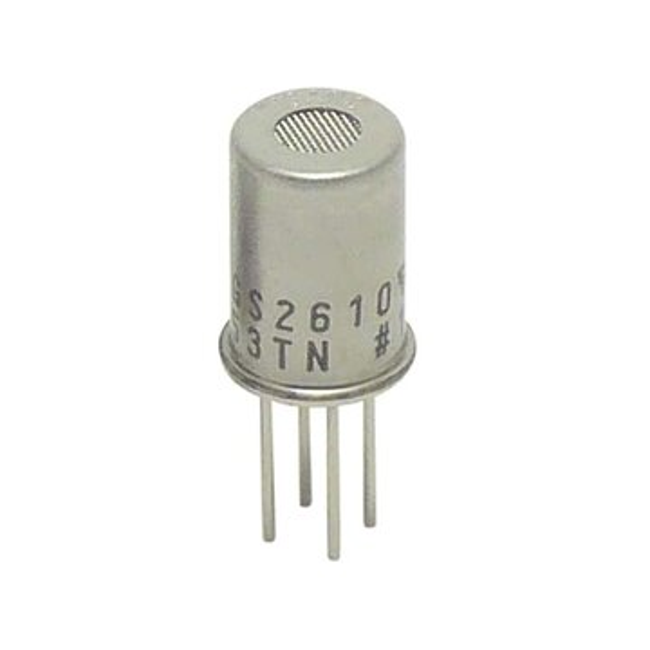
TGS2610-D00
- Technology
- Filtered metal-oxide LPG sensor
- Measurement
- Typical 1–25% LEL; characterized with iso-butane
- Interface
- Resistance readout; 5 V heater
- Consider for
- LPG-responsive detector designs
- Integration consideration
- About 280 mW heater power. Propane/butane response and threshold calibration must match the actual target mixture.
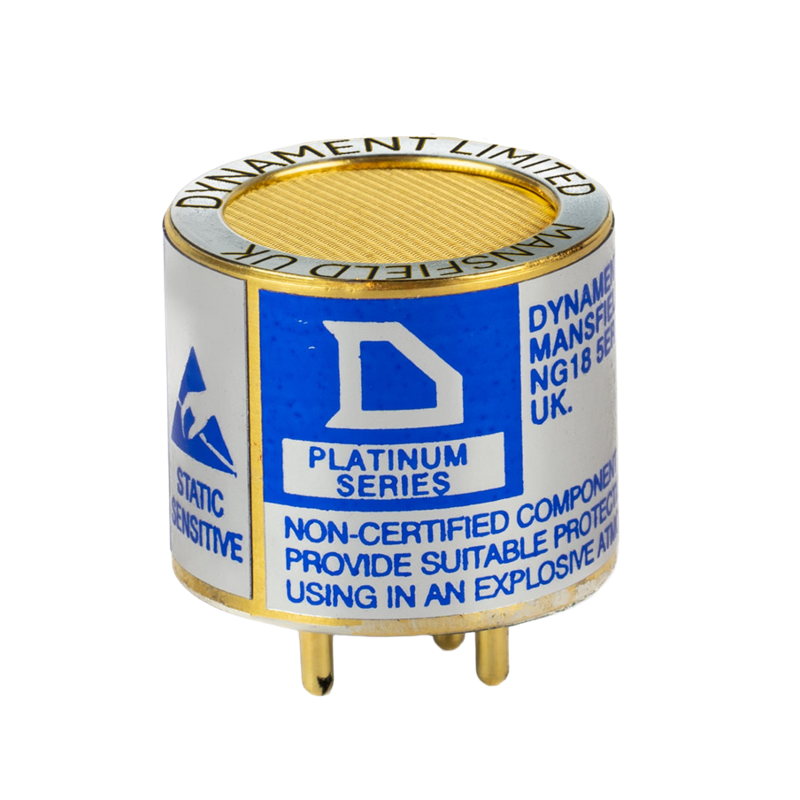
Platinum Series, propane configuration
- Technology
- Non-dispersive infrared module
- Measurement
- Selected 0–2% volume propane; 0.01% volume resolution
- Interface
- 2.8 V logic serial; 3–5 V supply
- Consider for
- Digital propane concentration measurement
- Integration consideration
- Order the propane calibration and power configuration. Series housing is shared with other gas configurations.
Dynament's 0–2% volume propane option has a 0.01% volume resolution in the cited range table. TGS2610-D00's typical 1–25% LEL detection span is tied to its gas characterization. Compare uncertainty and response using the exact gas and conditions.
Gas access, calibration and enclosure design.
Assess likely leakage points, ventilation, enclosure geometry and low-level accumulation. Propane and butane buoyancy is relevant, while airflow and obstructions shape the actual concentration distribution. Use the detector manufacturer's placement instructions and assess representative release conditions.
Prevent uncontrolled condensation, deposits and interference from installation materials. Maintain a suitable path for test gas and routine checks. Verify recovery after concentrated exposure before returning a detector to normal service.
TGS2610-D00 requires stable heater voltage and a resistance measurement circuit with controlled sensing-element dissipation. Dynament specifies logic-level serial, requiring compatible electrical levels and protocol support for industrial acquisition. Record the ordered gas configuration and calibration reference with data.
Installed-cost evaluation should cover power, enclosure, interface electronics, alarm equipment, calibration gas and replacement service. For LPG blends, document the response assessment across the intended composition range. A concentration value should retain overrange and fault status in downstream records.
LPG sensing questions.
Can iso-butane calibration be used for propane?
Use the manufacturer's gas-response information and a validated calibration method. A shared LPG label cannot establish identical response.
Can a methane Dynament module report propane concentration?
Order the propane configuration or use an explicitly documented supported method. Gas-specific calibration and firmware scope must be preserved.
Why does an LPG sensor need routine gas checks?
A functional challenge verifies response of the installed sensor and gas path. Calibration and maintenance follow the complete detector's prescribed procedure.
Read the original documentation.
Specifications use the linked manufacturer documents and their stated revisions. Review the current datasheet and exact ordered variant before final specification. Comparisons use manufacturer specifications and technical documentation.