Infrared-active gases and selected absorption bands.
Non-dispersive infrared sensing measures gases through selected infrared absorption bands. Common applications include carbon dioxide, methane and propane concentration. The optical bands, calibration and range are chosen for a particular gas or supported gas set.
Outputs can be ppm, volume percent or a gas-specific percent LEL. A module's configured quantity must remain attached to the data. A CO₂ probe and methane module can share an infrared principle while requiring different sample ranges and integration arrangements.
NDIR is suitable for gases with usable absorption in the instrument's selected bands. Conventional methane or CO₂ modules do not establish hydrogen or oxygen concentration measurement.
Absorption paths, reference channels and compensation.
An infrared source illuminates a gas path, and filtered detectors measure transmitted radiation. Absorption changes the measured intensity. Reference channels and internal compensation help separate gas response from changes in source output or other instrument conditions.
The ideal Beer–Lambert relationship is T = exp(−kL), where T is transmission, k is an absorption coefficient and L is path length. For a hypothetical optical depth kL of 0.2, transmission is about 0.819. A real sensor integrates over an optical band and uses its own calibrated response.
Path length influences sensitivity and packaging. Longer effective paths can support lower concentrations; higher-range measurement needs sufficient dynamic range. Optical geometry, contamination and sampling conditions influence the actual result.
Pressure and temperature affect gas density and absorption. Compensation should follow the exact module's measurement model. A volume-fraction output cannot be corrected simply by applying an unrelated pressure formula to an already compensated reading.
NDIR terminology.
- Absorption band
- A wavelength region used to detect the target gas.
- Optical path
- The route over which light interacts with the sample.
- Reference channel
- A measurement used by the instrument to track specified non-target changes.
- Optical depth
- A dimensionless measure of attenuation along the path.
- Baseline correction
- A documented adjustment based on a reference gas condition or exposure assumption.
- Pressure compensation
- Model-specific treatment of the effect of pressure on reported concentration.
Compact optical sensors and industrial probes.
Sensirion's discussion of CO₂ sensor miniaturization compares conventional NDIR geometry with photoacoustic optical sensing. The latter uses absorbed energy and an acoustic signal, while conventional NDIR measures transmitted light.
Current manufacturer formats range from small embedded modules to industrial probes and calibrated gas-specific modules. Their shared optical basis does not define enclosure protection, interfaces, calibration functions or operating range.
NDIR manufacturer and format comparisons.
Senseair S8 LP targets embedded CO₂ measurement. Vaisala GMP252 provides an industrial CO₂ probe. Dynament supplies integrated infrared modules configured for gases such as methane. Compare the selected gas, environmental range and complete interface requirements.
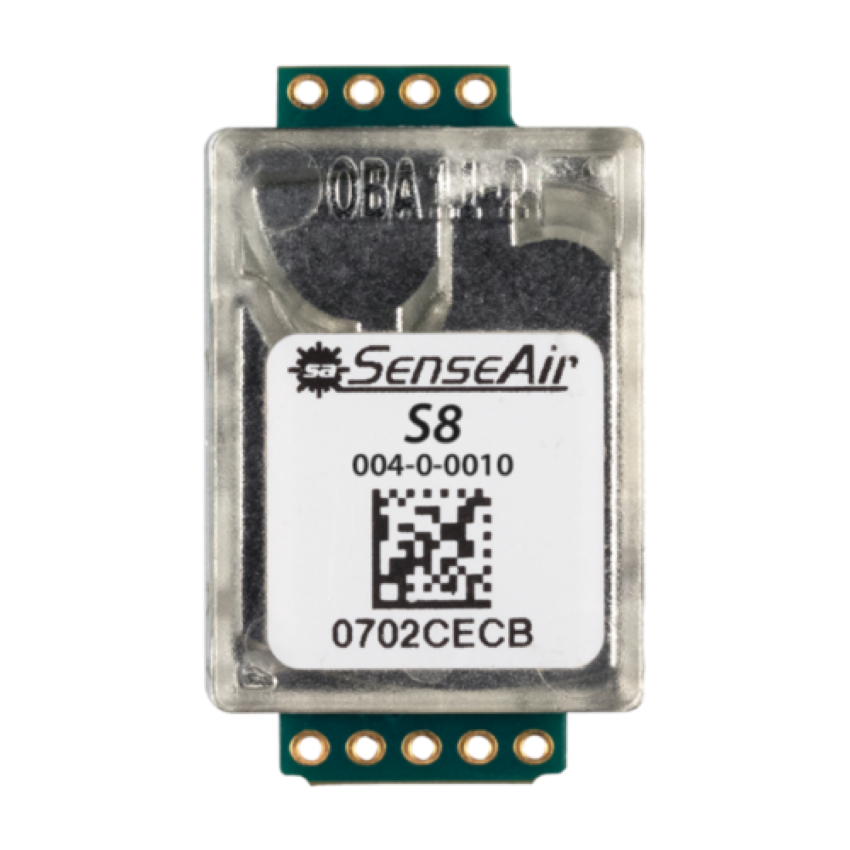
S8 LP
- Technology
- NDIR CO₂ module
- Measurement
- 400–10,000 ppm; article 004-0-0053
- Interface
- UART with Modbus protocol
- Consider for
- Compact CO₂ monitoring
- Integration consideration
- UART is not an RS485 electrical interface. Other S8 variants have different specifications.
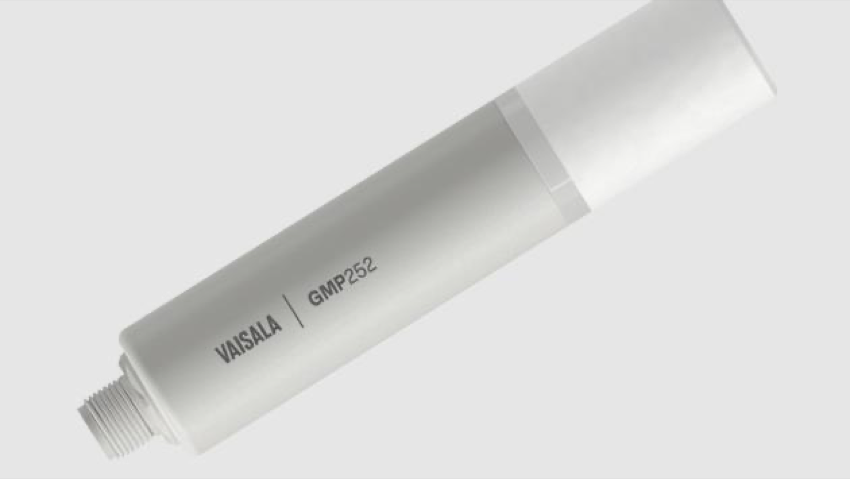
GMP252
- Technology
- Industrial NDIR probe
- Measurement
- 0–10,000 ppm; higher range with reduced accuracy
- Interface
- RS485 / Modbus; analog outputs
- Consider for
- Greenhouses and demanding environments
- Integration consideration
- Confirm ordered output, supply and compensation settings.
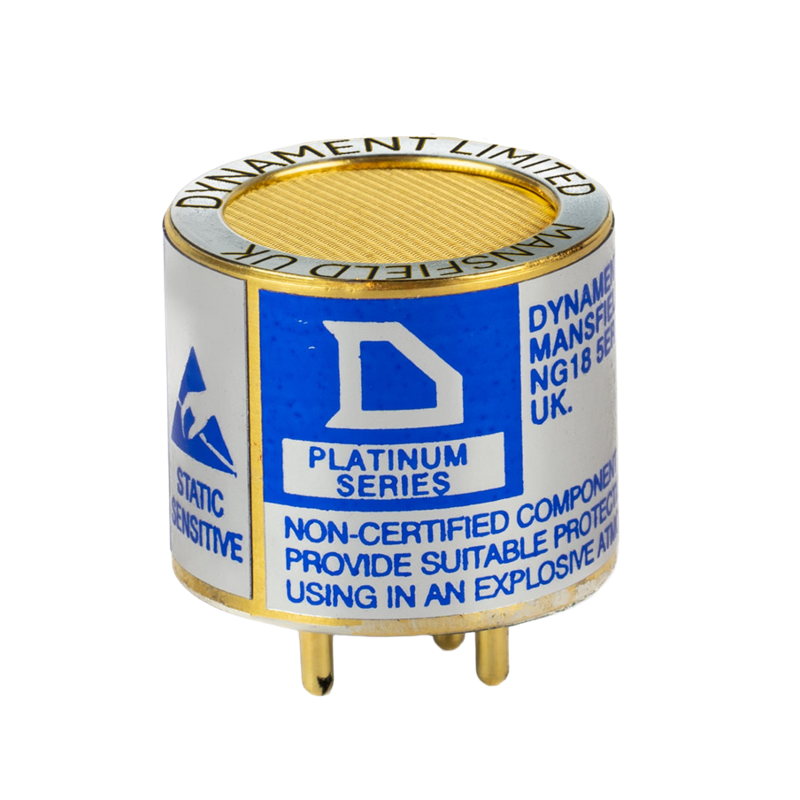
Platinum Series, methane configuration
- Technology
- Non-dispersive infrared module
- Measurement
- Selected 0–5% volume CH₄ option; 0.01% volume resolution
- Interface
- 2.8 V logic serial; 3–5 V supply
- Consider for
- Digital methane concentration measurement
- Integration consideration
- Gas ranges and power modes are ordered configurations. Level conversion and protocol handling are required.
The S8 family image is identified separately from the S8 LP specification. Dynament gas-range and power options are separate configurations. Industrial probe outputs require the ordered variant and protocol to be confirmed.
Optical condition, reference exposure and data quality.
Maintain gas access while protecting the optical system from contamination and condensation. Follow the manufacturer's filter and enclosure requirements. A weather cover can alter airflow and response; characterize the completed installation.
Check the assumptions behind automatic baseline correction. A continuously elevated CO₂ environment may not provide the reference exposure expected by a room-monitoring algorithm. Use the appropriate calibration mode and a documented reference method for that application.
Record pressure and temperature where required by the selected compensation method. Verify gain and zero across the intended range, with traceable gas mixtures and stable sampling conditions. Preserve overrange and diagnostic states alongside numerical concentration.
Embedded modules can expose logic serial or board-level interfaces. Industrial probes may supply voltage, current or industrial serial, depending on configuration. Cost comparisons should include power, electrical conversion, calibration equipment, enclosure and replacement access. A documented sensing principle alone cannot establish a complete sensor-to-platform connection.
NDIR sensing questions.
Can one NDIR calibration be used for several gases?
Use only the gases and configurations documented by the manufacturer. Absorption bands and calibration relationships are gas-specific.
Why can automatic CO₂ baseline correction fail in a process room?
The room may not provide the required low-concentration reference exposure. Confirm the algorithm assumptions and choose a suitable calibration mode.
Does a longer optical path always improve the instrument?
It changes sensitivity and dynamic range along with packaging and sampling considerations. The appropriate path depends on the concentration range and uncertainty required.
Read the original documentation.
Specifications use the linked manufacturer documents and their stated revisions. Review the current datasheet and exact ordered variant before final specification. Comparisons use manufacturer specifications and technical documentation.