Refrigerant identity, concentration and leakage response.
Refrigerant detection begins with the exact refrigerant or blend used by the equipment. R-32, R-454B and R-290 have different physical properties and calibration requirements. A detector's supported gas list belongs in the specification together with range, alarm behavior and the required appliance response.
Concentration may be expressed in ppm, volume percent or percent of a lower flammability limit, %LFL. One volume percent equals 10,000 ppm. Converting into %LFL requires the declared reference for the exact refrigerant. Blend-calibrated outputs should retain the manufacturer's reporting convention.
Appliance integration also includes fault handling, relays, ventilation and load-control responses. Sensor or component recognition must be assessed within the complete equipment configuration. Select the current applicable product documentation before designing a safety function.
Thermal conductivity and semiconductor detection.
Thermal-conductivity sensing measures gas-dependent heat transport around a heated element. Refrigerant changes the thermal behavior of the air mixture. Temperature, humidity and other constituents affect that relationship; the sensor's compensation and gas calibration establish its reported concentration.
Sensirion SGD43S combines sensing, compensation, self-monitoring and relay outputs. Its S5 and S7 variants support different refrigerant sets. The digital concentration and required appliance action need to follow the ordered calibration and system configuration.
Metal-oxide sensors use gas-dependent changes in surface conductivity at a controlled temperature. Figaro TGS2630 responds to specified refrigerants and includes filter material for selected interferences. Its resistance response requires a validated concentration or threshold model and stable heater operation.
A typical sensitivity curve describes laboratory behavior for a stated gas and conditions. It does not establish the response of every sensor to every refrigerant blend. Qualification should include the actual gases, likely contaminants, environmental extremes and failure states.
Refrigerant detection terminology.
- Refrigerant blend
- A specified mixture whose detection response needs its own calibration treatment.
- %LFL
- Concentration relative to the declared lower flammability limit.
- Thermal conductivity
- A gas mixture's ability to transport heat, used by a thermal detector.
- Detection threshold
- The concentration-related condition used to trigger a documented response.
- Self-monitoring
- Internal checks and fault reporting defined by the device.
- Mitigation circuit
- The equipment arrangement that performs the required action following detection or fault.
From heated components to integrated detection systems.
TGS2630's cited product sheet carries a January 2020 revision and characterizes a filtered semiconductor component. Sensirion's February 2025 SGD43S datasheet describes an integrated thermal-conductivity system with relay and Modbus functions.
The additional electronics change the integration work. A raw component requires heater control, readout and a validated detector design. An integrated unit provides more defined functions, while appliance wiring and mitigation remain part of the overall design.
Refrigerant manufacturer options.
Sensirion SGD43S targets appliance integration with defined refrigerant calibrations. Figaro TGS2630 supplies a semiconductor component for a custom detector. Comparing complete installed packages requires allowance for circuitry, qualification and service.
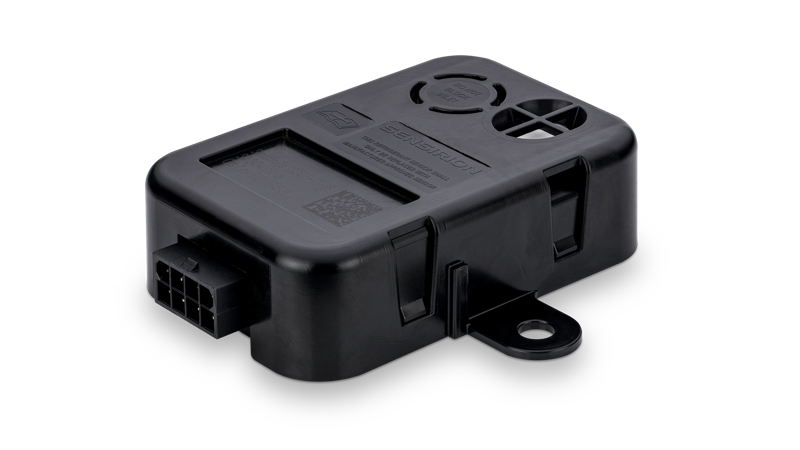
SGD43S-M3-S5 / S7
- Technology
- Thermal-conductivity refrigerant detection system
- Measurement
- 0–100% LFL; S5: R-32/R-454B; S7: R-454A/R-454C/R-455A
- Interface
- 24 V AC/DC; RS485 Modbus RTU and dual relay outputs
- Consider for
- HVACR appliance integration
- Integration consideration
- Gas calibration, reporting convention and required mitigation circuitry depend on the exact variant.
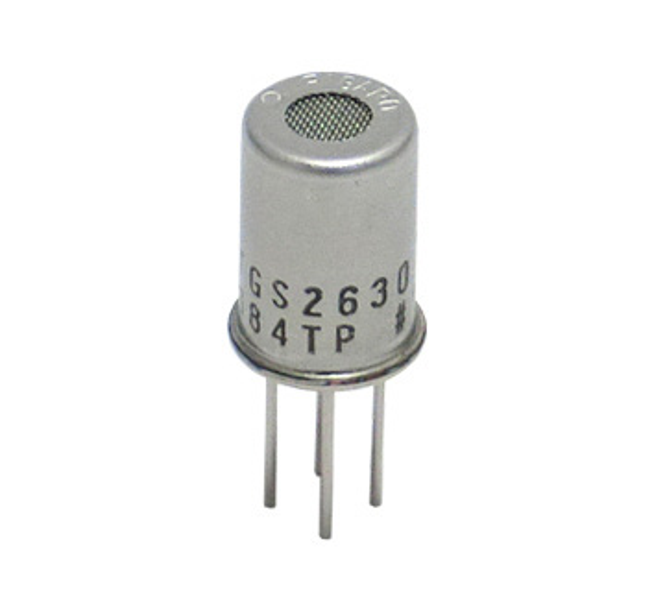
TGS2630
- Technology
- Filtered metal-oxide refrigerant sensor
- Measurement
- Typical 1,000–10,000 ppm range; test specifications use R-32
- Interface
- Resistance readout; 5 V heater
- Consider for
- Custom refrigerant-leak detector designs
- Integration consideration
- Heater about 280 mW; seven-day standard-test conditioning. Validate gas-specific response and complete-system compliance.
SGD43S-M3-S5 supports R-32 and R-454B; S7 supports R-454A, R-454C and R-455A. Its February 2025 datasheet defines the relevant integration requirements. Its status as a sensor or detection system depends on the appliance circuitry.
Appliance location, wiring and commissioning.
Follow the manufacturer's mounting orientation and gas-access requirements. Evaluate leakage routes and airflow within the actual appliance; a general room placement rule is insufficient for a unit installed inside refrigeration equipment. Keep the sensing inlet clear of deposits and installation materials.
Verify the supported refrigerant configuration, supply and relay wiring. SGD43S uses 24 V AC/DC and a documented RS485 Modbus interface. Implement its startup, warning and fault states alongside the concentration registers. Read values spanning multiple registers in the transaction arrangement prescribed by the manual.
TGS2630 needs heater power, resistance readout and gas-specific calibration. Its standard-test conditions include a seven-day conditioning period. Validate the finished device's response and environmental behavior before assigning detection thresholds.
Include the sensing unit, mitigation hardware, enclosure, wiring, qualification and replacement procedure in ownership cost. Commission the required appliance response through an approved test procedure. Logging the concentration is one part of that system, and must preserve invalid, startup and fault conditions.
Refrigerant sensing questions.
Can one calibration cover every refrigerant?
Calibration is gas- and variant-specific. The supported refrigerant list and reporting convention must match the equipment's refrigerant.
What differs between SGD43S S5 and S7?
They support different refrigerant sets. The required model follows the actual refrigerant and application documentation.
Does an RS485 concentration output replace appliance mitigation?
The appliance still needs the required detection, fault and mitigation circuitry. Follow the complete-system integration requirements.
Read the original documentation.
Specifications use the linked manufacturer documents and their stated revisions. Review the current datasheet and exact ordered variant before final specification. Comparisons use manufacturer specifications and technical documentation.