Gas response, indices and calibrated concentration.
Metal-oxide gas sensors use gas-dependent electrical changes in a heated sensing material. Products range from raw resistance-output components to integrated devices supplying processed indices or other defined signals. The reported quantity depends on the sensor, algorithm and calibration.
A resistance change can indicate a change in gas composition. Assigning it to a particular concentration requires a validated response model for the target gas and environment. Mixed gases can produce a combined signal that requires additional interpretation.
VOC Index, estimated equivalent outputs and a target-gas concentration have different definitions. Retain the selected output name, algorithm and units in the data record. Classifiers require a training and validation process matched to the intended application.
Surface interaction and controlled heating.
Gas molecules interact with a metal-oxide surface, changing its electrical behavior. Material composition and operating temperature influence sensitivity and signal direction. Tin-oxide components such as TGS826 become more conductive in reducing-gas exposure.
A heater establishes the sensing temperature. Continuous heaters and programmed temperature profiles offer different response and power characteristics. A board's supply, enclosure and airflow can affect both heater behavior and ambient temperature measurements.
A load-resistor circuit can convert sensing resistance into voltage. For a hypothetical 5 V divider with a 10 kΩ sensor and 10 kΩ load, the load voltage is 2.5 V. At 5 kΩ sensor resistance with the same load, it is about 3.33 V. The circuit relationship does not itself provide a gas concentration.
Integrated sensors add compensation and algorithms. A gas index may adapt to exposure history; its value therefore depends on the documented algorithm behavior and startup period. Preserve configuration and state when comparing data across devices.
Metal-oxide sensing terminology.
- Sensing resistance
- Electrical resistance of the gas-responsive material under defined conditions.
- Heater profile
- The temperature-control sequence applied during measurement.
- Rs/Ro
- Resistance normalized to a stated reference condition.
- Gas index
- A processed relative signal with an algorithm-specific definition.
- Conditioning
- Exposure and operating time required before interpreting the signal.
- Classifier
- A validated model assigning signal patterns to specified categories.
- Interference
- Response to gases or environmental changes outside the intended measurement model.
Taguchi sensors and integrated digital processing.
Figaro's company history dates commercial tin-oxide gas-sensor development to 1968 and its foundation to 1969. Its TGS826 documentation describes a heated ammonia-responsive component with resistance output.
Later integrated formats, including Bosch BME688 and Sensirion SGP40, combine sensing with digital functions and software-defined interpretation. Their output definitions and calibration arrangements differ from those of a raw gas-responsive component.
Metal-oxide manufacturer options.
Bosch BME688 supports integrated environmental sensing and gas-response analysis. Sensirion SGP40 supplies a gas signal used by the VOC algorithm. Figaro TGS826 represents a target-application component requiring external circuitry and calibration.
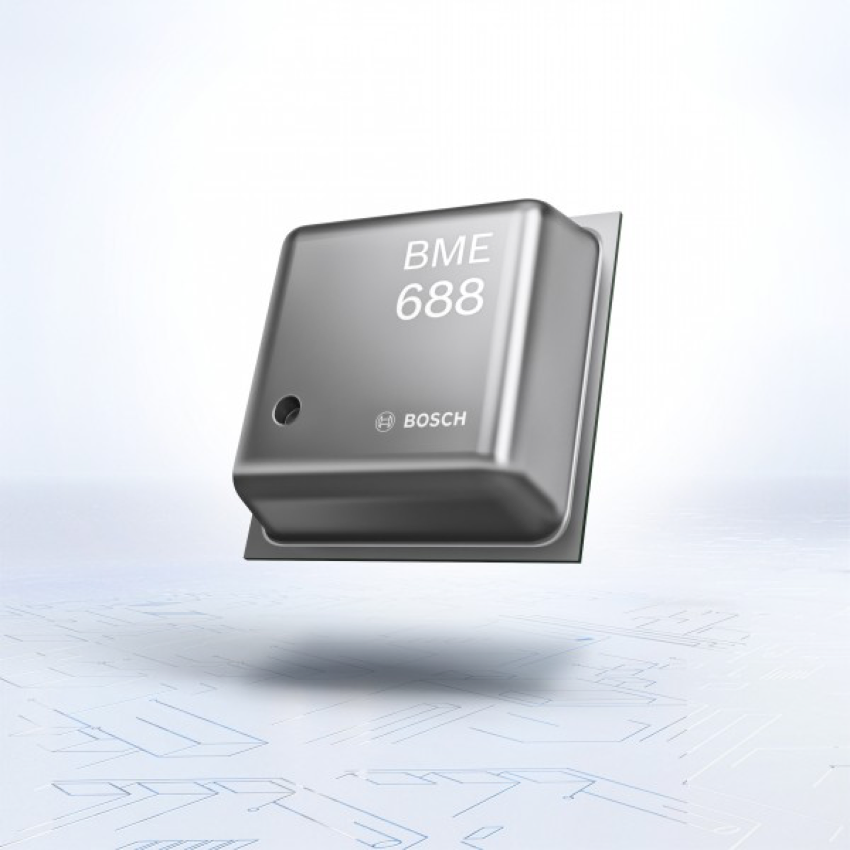
BME688
- Technology
- Gas-resistance and environmental component
- Measurement
- Gas resistance; software-dependent IAQ outputs
- Interface
- I²C / SPI
- Consider for
- Embedded gas-pattern development
- Integration consideration
- Model training and software matter. CO₂-equivalent output is not measured CO₂.
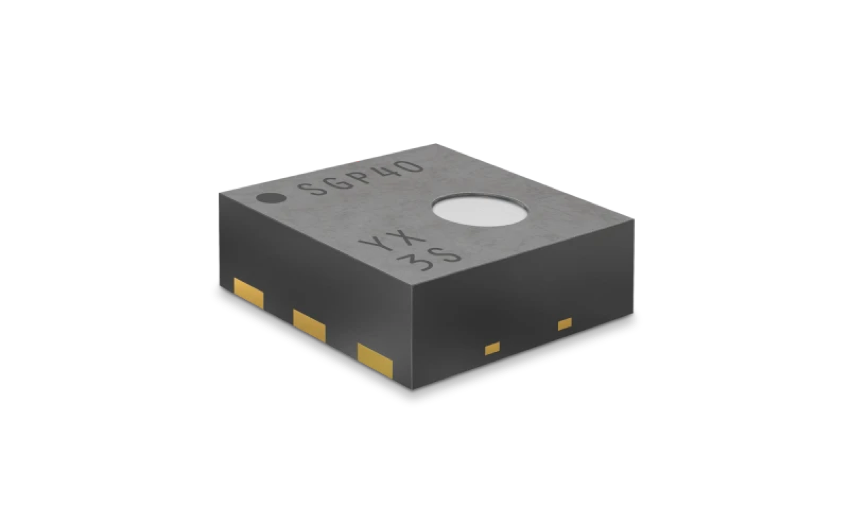
SGP40
- Technology
- Metal-oxide VOC component
- Measurement
- VOC Index through manufacturer algorithm
- Interface
- I²C
- Consider for
- Relative indoor VOC trend tracking
- Integration consideration
- Index is not a chemical-specific concentration. Requires host algorithm and humidity compensation.
TGS826
- Technology
- Heated metal-oxide semiconductor
- Measurement
- Typical detection range 30–300 ppm NH₃
- Interface
- Resistance readout; 5 V heater
- Consider for
- Ammonia-responsive equipment designs
- Integration consideration
- Heater consumes about 833 mW. Other gases and humidity affect response; public product sheet is REV 05/04.
These devices are compared as technology and integration examples. Their outputs should be evaluated against the same intended task before comparing performance. Ammonia concentration requires a gas-specific response model and validation.
Environmental validation and signal interpretation.
Separate the sensor from enclosure heat sources and maintain representative gas access. Follow handling guidance on contamination from adhesives, solvents and installation materials. Validate temperature and humidity effects in the completed product.
Preserve heater settings, sampling interval and algorithm state. Startup, recovery and adaptation can be relevant to observed transients. Changing a heater profile or calibration model requires re-evaluation of the concentration or classification relationship.
Test the intended gas mixtures across realistic concentration and environmental ranges. Use separate validation observations when developing a classifier; repeated measurements of the same training exposure cannot establish generalization to new conditions.
Board-level digital interfaces require compatible supply and signal levels. Raw components need heater power and resistance readout. Include software maintenance, validation, calibration, enclosure and replacement access in ownership cost. For safety detection, select a suitable complete instrument and evaluate its alarm function.
Metal-oxide sensing questions.
Can sensor resistance be converted directly into ppm?
It needs a calibrated gas-response model and validated environmental treatment. The electrical divider equation only converts resistance and voltage.
Why does a gas index change after startup?
The sensing element and algorithm may require conditioning and exposure-history adaptation. Use the documented startup behavior and validity states.
Can one trained gas classifier be moved to another enclosure?
Enclosure, airflow and thermal changes can alter the signal. Validate the model again in the new installation.
Read the original documentation.
Specifications use the linked manufacturer documents and their stated revisions. Review the current datasheet and exact ordered variant before final specification. Comparisons use manufacturer specifications and technical documentation.