Particle counts, size bins and mass estimates.
An optical particle counter detects particles passing through an illuminated sample volume and assigns events to optical size bins. Number concentration relates detected events to sampled volume. A mass concentration is derived using additional assumptions or a calibrated aerosol model.
PM₂.₅ and PM₁₀ are associated with aerodynamic-size conventions. Optical size depends on scattering response, particle properties and calibration. A low-cost optical output should retain its manufacturer definition when compared with a reference method.
Count distributions can reveal changes that a single mass channel obscures. Their interpretation requires known sample flow, bin boundaries and instrument validity. Counting efficiency and the smallest detectable size remain model-specific.
Scattering pulses and sample volume.
A particle scatters light into a detector as it crosses the sensing region. The instrument analyzes pulse behavior and relates it to optical size using a calibration model. Shape, refractive index and orientation can influence the result.
Sample flow establishes the volume associated with the counts. In a simplified example, 1,000 detected events in 0.5 litres produce 2,000 events per litre before accounting for counting efficiency or other corrections. Flow error directly affects the inferred concentration.
For equal-density spheres, particle mass scales with diameter cubed. Doubling diameter multiplies mass by eight. Estimating mass from an optical size distribution therefore depends strongly on sizing, assumed density and the chosen particle model.
At high concentrations, overlapping events or coincidence can affect counting and sizing. Fans, inlets and filters also influence transport and losses. Validate the complete sensor and sample path against the intended aerosol and reference measurement.
Particle-counter terminology.
- Size bin
- A defined interval used to group estimated particle sizes.
- Counting efficiency
- The fraction of particles detected under stated size and test conditions.
- Coincidence
- Overlapping detection events that can affect counts or estimated sizes.
- Sample flow
- The volume of air passing through the defined measurement path per unit time.
- Optical diameter
- Size inferred from scattering relative to the instrument's calibration.
- Mass model
- The assumptions or calibration relating the optical signal to mass concentration.
- Hygroscopic growth
- Particle growth through water uptake under changing humidity.
Optical measurements and sensor-network guidance.
EPA published its original Air Sensor Guidebook in 2014 and an enhanced edition in 2022. The later guidance reflects broader sensor use and emphasizes evaluation, installation and interpretation.
Compact optical formats now expose different combinations of count, size and mass outputs. Manufacturer specifications and independent collocation remain necessary to determine their suitability for a particular aerosol and study.
Particle-counter manufacturer comparisons.
Alphasense OPC-N3 provides an optical-counter format with size-resolved outputs. Sensirion SPS30 targets compact particulate-matter integration. Compare their documented channels, flow arrangement, interfaces and performance under the aerosol conditions of interest.
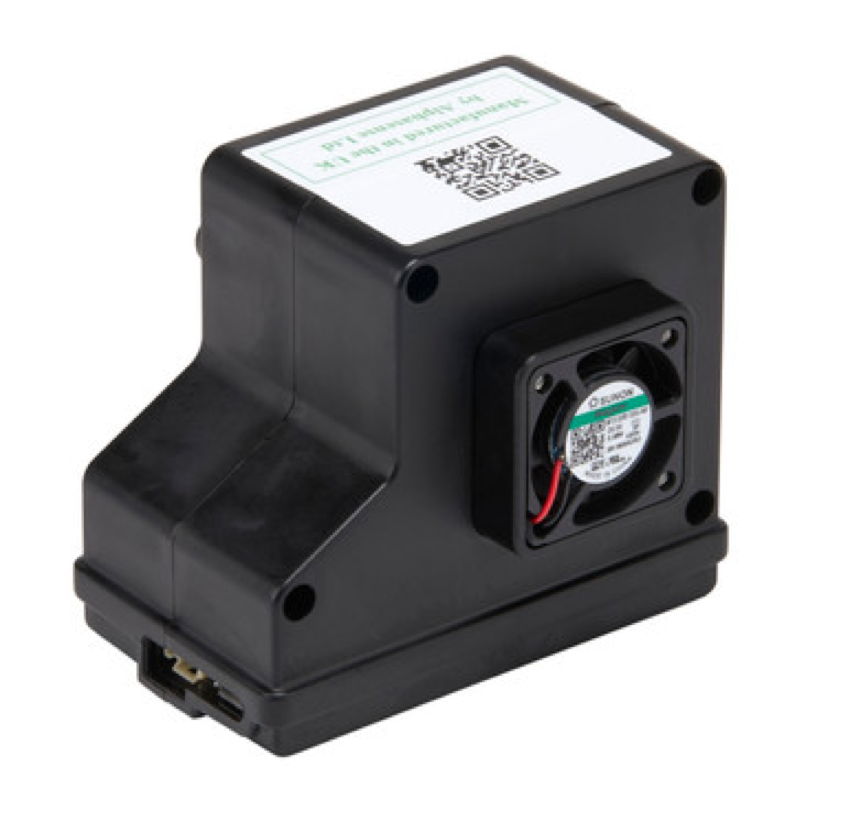
OPC-N3
- Technology
- Optical particle counter
- Measurement
- PM1, PM2.5, PM10 and PM4.25 outputs
- Interface
- SPI; see manufacturer cable and datasheet
- Consider for
- Particle-size distribution projects
- Integration consideration
- Needs host electronics and a protected sampling design.
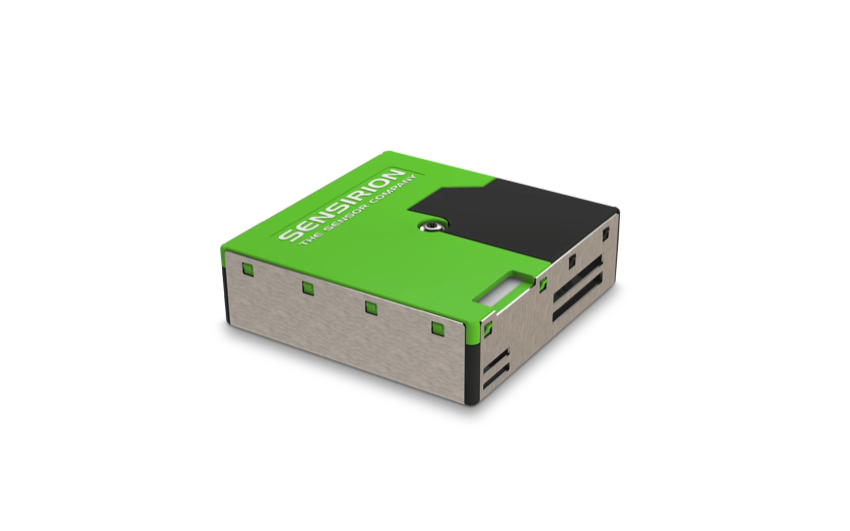
SPS30
- Technology
- Laser-scattering PM module
- Measurement
- PM1, PM2.5, PM4 and PM10 outputs
- Interface
- I²C / UART
- Consider for
- Embedded air-quality monitoring
- Integration consideration
- Mass is inferred from scattering. Preserve inlet and outlet geometry.
A mass value and size-bin count are different outputs. Confirm which channels are available through the ordered interface and preserve their units in the acquisition system.
Inlets, humidity and collocation.
Keep the inlet and outlet clear and follow the specified mounting arrangement. Avoid recirculating exhausted air through the inlet. Weather protection should prevent direct water entry while maintaining a characterized sample path.
Humidity can change particle size through water uptake and can cause condensation. Record temperature and humidity beside PM data. A drying arrangement introduces its own losses and measurement definition, which should be documented.
Collocate with a suitable reference across representative aerosol, concentration and environmental conditions. Align averaging intervals and investigate bias, precision and missing data. A correction fitted to one site or season needs validation before transfer to another.
Maintain fans and optical paths according to the sensor instructions. Record service, faults and calibration changes. Include enclosure, airflow, power, reference comparison and replacement costs in procurement. A successful digital connection cannot by itself establish aerosol measurement quality.
Particle-counter questions.
Why can two optical sensors report different PM mass?
Optical geometry, sizing, flow and mass models can differ, especially when the aerosol differs from the calibration material.
Does a size-bin output represent aerodynamic diameter?
Use the manufacturer's definition. Optical sizing and aerodynamic behavior use different relationships.
Why should humidity be logged beside PM?
Water uptake and condensation can change the measured optical response and help explain periods of disagreement with a reference.
Read the original documentation.
Specifications use the linked manufacturer documents and their stated revisions. Review the current datasheet and exact ordered variant before final specification. Comparisons use manufacturer specifications and technical documentation.