Ozone concentration in ambient and process air.
Ozone, O₃, is a reactive oxidizing gas. Ambient monitoring tracks its concentration near people, vegetation and emission sources. Industrial systems also measure ozone around generators, treatment equipment and process exhausts. These applications can span very different concentrations, sampling arrangements and response requirements.
Ground-level ozone forms through sunlight-driven reactions involving nitrogen oxides and volatile organic compounds. Regional transport and local chemistry affect the concentration at a monitoring location. A measurement close to a combustion source can differ from a nearby background measurement because nitric oxide consumes ozone. Record the location, inlet height, averaging interval and surrounding activity alongside the reading. The EPA ozone overview describes its atmospheric formation.
Gas concentration is commonly expressed in parts per billion or parts per million by volume. One ppm equals 1,000 ppb; 0.060 ppm is 60 ppb. Reporting in μg/m³ also requires a temperature and pressure basis. Measurements intended for occupational alarms or regulatory reporting require instruments, procedures and approvals appropriate to that use.
UV absorption, electrochemistry and semiconductor sensing.
Ultraviolet absorption
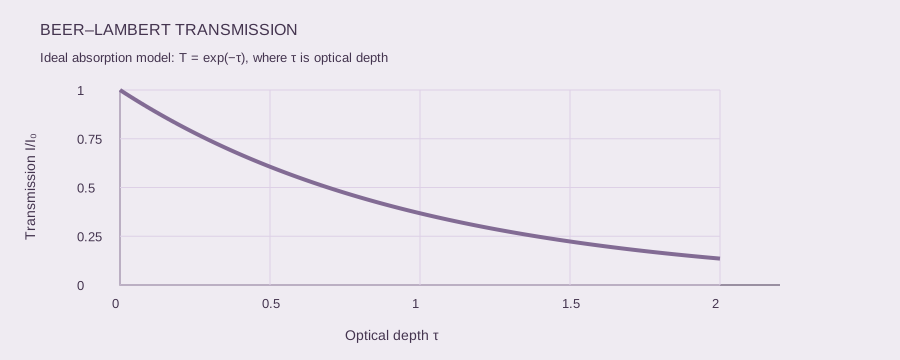
Ozone absorbs ultraviolet light near 254 nm. A photometer compares transmitted light through the sample with a reference measurement from air in which ozone has been removed. The Beer–Lambert relationship connects the intensity ratio with absorption cross-section, optical path length and molecular number density. Temperature and pressure are needed to express that number density as a gas mixing ratio. Optical contamination, reference-path behavior and sample humidity can affect the result.
With transmission T = I/I₀ and optical depth τ, the ideal relationship is T = e−τ. Greater absorption reduces the transmitted light. The NIST Standard Reference Photometer uses this principle to support ozone measurement traceability.
Electrochemical cells
Gas diffuses to an electrode, where reactions produce a current that the instrument converts into concentration. The readout needs a suitable electrode circuit, baseline correction and calibration. Oxidizing-gas cells may respond to both ozone and nitrogen dioxide. Alphasense specifies its OX-B431 for this combined response and describes pairing it with a filtered NO2-B43F channel to estimate ozone. Both signals require correction before subtraction.
The two channels must be characterized together. Differences in gas sensitivity, temperature response, sample delay and baseline drift propagate into the derived ozone result. Subtracting raw currents from two cells would ignore these factors. The NO₂ guide explains selective filtering and signed electrode output.
Gas-sensitive semiconductors
Oxidizing gases change the resistance of a semiconductor sensing material. Material composition, operating temperature and the instrument’s measurement sequence influence selectivity and stability. Aeroqual uses its GSS technology for low-range ozone sensor heads and analyzer modules. The head and analyzer module have separate specifications; the fixed module’s performance figures apply to its own sampling and processing system.
Ozone measurement parameters.
- Mixing ratio
- Ozone abundance relative to the gas mixture, reported as ppb or ppm by volume. Keep the unit attached to each value.
- Absorption cross-section
- The wavelength-dependent molecular property used to convert optical absorption into number density.
- Optical path length
- Distance traveled by light through the sample. It affects absorption sensitivity and the usable concentration range.
- Zero and span
- Zero establishes response to ozone-free air. Span checks response at a known nonzero ozone concentration.
- Cross-sensitivity
- Response to a gas other than the target. NO₂ is particularly relevant to oxidizing-gas electrochemical measurements.
- Detection limit
- A limit established with a specified noise criterion and averaging interval. Retain those conditions when comparing instruments.
- Response time
- Time required after a concentration step, reported using a specified fraction such as T90 or a complete step-response criterion.
- Traceability
- A documented chain of calibrations linking a measurement to a reference, with uncertainty established along the chain.
For a hypothetical derived ozone measurement, assume two corrected channels each have independent standard uncertainty of 5 ppb. Subtracting the channels gives a combined standard uncertainty of √(5² + 5²), approximately 7.1 ppb. Correlated errors require a covariance term and can change this result. The calculation applies to the assumed channel uncertainties; actual instrument uncertainty requires measured channel errors and their covariance.
Ozone standards and compact instruments.
NIST’s Standard Reference Photometer program began in the early 1980s through collaboration with the US EPA. Its UV photometers established an instrument network for comparing ozone calibration systems and supporting measurement traceability. This history helps explain the central role of calibrated photometers in ozone measurement.
Compact electrochemical and semiconductor designs made additional distributed and portable measurements possible. Their complete instruments must account for environmental response and interfering gases. EPA publishes performance targets and testing protocols for ozone sensors used in outdoor, fixed-location, non-regulatory supplemental and informational monitoring. That defined scope provides a useful basis for evaluating a network without assuming that every sensor is suitable for compliance reporting.
Product documentation also changes. The current 2B Technologies 106-L product page and downloadable brochure state a 0–20 ppm range. An older official support page states 0–100 ppm. The March 2025 Rev. K-1 manual records the range change to 20 ppm for instruments factory-calibrated after 1 January 2025, approximately serial number 3079 onward. The comparison uses current documentation; confirm the supplied instrument’s revision and range.
Alphasense, Aeroqual and 2B Technologies.
These options cover a cell for instrument development, a host-dependent sensor head and a complete UV analyzer. Their quoted performance describes different levels of the measurement chain. Include electronics, sampling, calibration and the required host when assessing cost and suitability.
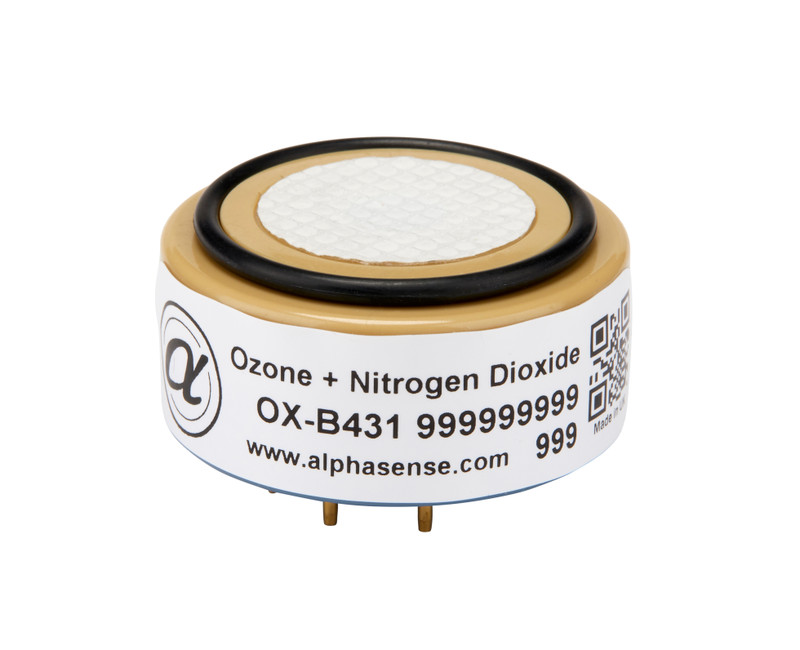
OX-B431
- Technology
- Four-electrode electrochemical oxidizing-gas cell
- Measurement
- O₃ range limit 20 ppm; −225 to −750 nA/ppm at 1 ppm O₃
- Interface
- Electrode current; analog front end and calibrated host required
- Consider for
- Paired O₃/NO₂ environmental instrument development
- Integration consideration
- Responds to both O₃ and NO₂. Corrected paired channels are needed to separate ozone; the noise figure uses Alphasense ISB circuitry.
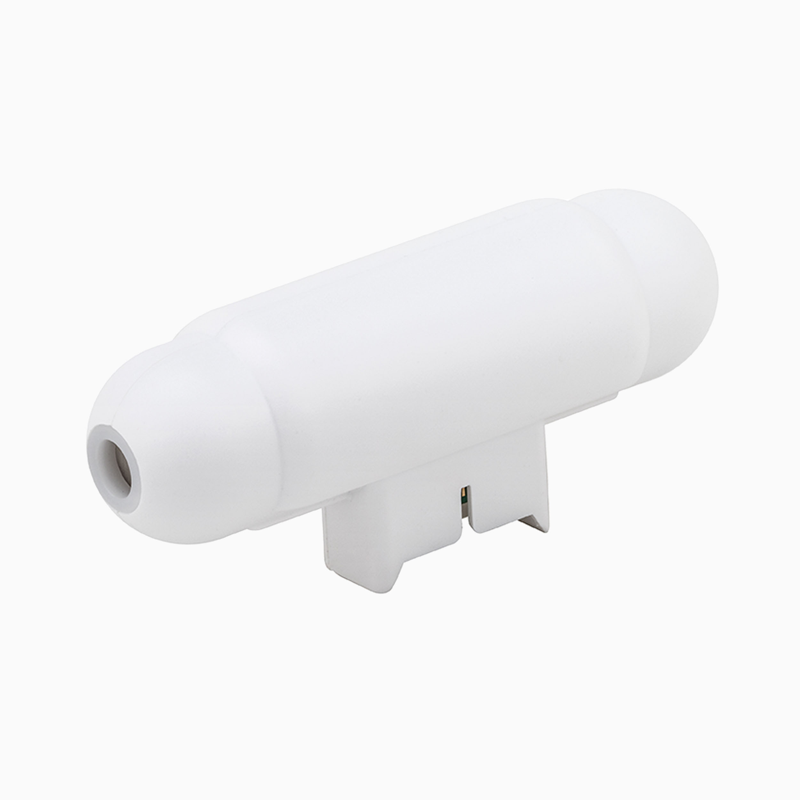
OZL / OZL2
- Technology
- Gas-sensitive semiconductor ozone head
- Measurement
- 0–0.5 ppm; 0.001 ppm minimum detection limit
- Interface
- Compatible Aeroqual monitor host required
- Consider for
- Low-range ozone measurements with supported Aeroqual monitors
- Integration consideration
- Factory-calibration accuracy: <±0.008 ppm at 0–0.1 ppm; <±10% at 0.1–0.5 ppm. Stated response time: 60 s; temperature: 0–40 °C.
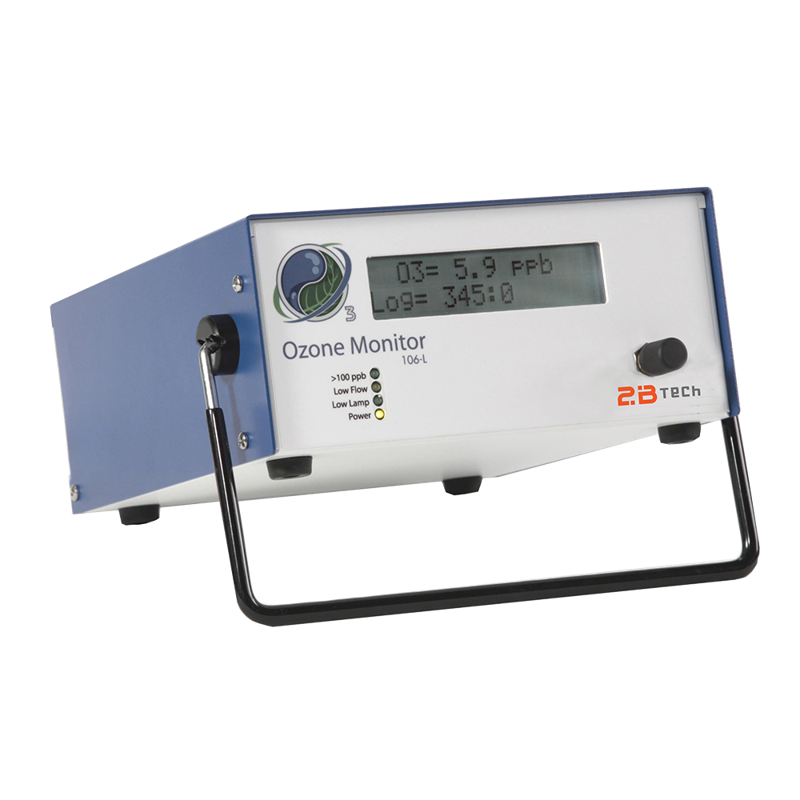
Model 106-L
- Technology
- Single-beam UV absorption at 254 nm
- Measurement
- Current range 0–20 ppm; accuracy: greater of 1.5 ppb or 2% of reading
- Interface
- USB, RS232, scalable 0–2.5 V and 4–20 mA outputs
- Consider for
- Complete sampled ozone analyzer installations
- Integration consideration
- 3 ppb detection limit at 10-second averaging, 2σ criterion. Requires powered sampling and calibration. Older official documentation lists a different range.
Alphasense figures refer to the standard OX-B431 and Version 1.1 technical specifications. OX-B431+ adds integrated memory and temperature functions. Aeroqual figures refer to the OZL/OZL2 0–0.5 ppm head. The 106-L range uses the current manufacturer page and brochure checked on 13 October 2026.
At 50 ppb, Aeroqual’s specified low-range factory-calibration accuracy of less than ±8 ppb is relevant to the measurement objective. Its 1 ppb display resolution describes the displayed increment. The 106-L’s stated precision uses a 10-second average and a one-standard-deviation criterion; its detection limit uses two standard deviations. Check these conditions alongside the response time and sampling interval.
Sampling losses, calibration and data acquisition.
Ozone reacts with surfaces, making inlet materials, cleanliness and residence time part of the measurement system. Use the instrument manufacturer’s prescribed sample tubing and fittings. Keep the inlet route short where possible, protect it from water ingress and inspect filters and flow regularly. Record inlet changes and maintenance because a changed sampling path can alter the measured concentration. The 106-L manual specifies inert inlet materials such as PTFE, PFA, FEP or PVDF and recommends testing inlet filters for ozone loss. Its inlet must remain unpressurized.
Calibration requires a controlled ozone source and a suitable reference measurement. Document zero air, generated concentration, flow, stabilization time, reference uncertainty and instrument settings. Follow the manufacturer’s procedure for field adjustment and service. A successful zero check alone leaves sensitivity unverified.
For outdoor deployment, evaluate the complete enclosure and sampling system across representative temperature and humidity conditions. Collocation with a suitable reference should assess bias, drift, response delay and errors at the concentrations of interest. Preserve raw channels for paired-cell designs, plus calibration coefficients, units, timestamps, flow or fault indicators and sensor identifiers.
The OX-B431 needs electrode electronics and an instrument host. The OZL head needs a supported Aeroqual host. The 106-L lists USB, RS232 and scalable analog outputs, including 4–20 mA; its RS232 output requires the corresponding interface. For any gateway installation, verify the complete instrument’s power, output scaling, protocol and diagnostic behavior. Budget for calibration equipment, sampling consumables, service and replacement parts as well as the sensor itself.
Ozone sensor questions.
Can an OX-B431 cell measure ozone by itself?
It responds to ozone and nitrogen dioxide. Separating the ozone contribution requires additional information, such as a corrected filtered NO₂ channel, and characterization of the combined instrument.
Why does tubing affect an ozone measurement?
Ozone can be lost through reactions with sampling surfaces. Materials, contamination, length and flow determine how closely the delivered sample represents air at the inlet.
How should conflicting 106-L range specifications be handled?
The current product page and brochure specify 0–20 ppm, while an older official support page specifies 0–100 ppm. The March 2025 Rev. K-1 manual identifies a range change for instruments factory-calibrated after 1 January 2025. Check the serial number, calibration record and documentation matching the supplied unit.
What should an ozone data record contain?
Store concentration, units, averaging interval, timestamp, calibration identification and instrument status. Environmental measurements and raw electrode channels can support later evaluation and correction.
Read the original documentation.
Specifications use the linked manufacturer documents and their stated revisions. Review the current datasheet and exact ordered variant before final specification. Comparisons use manufacturer specifications and technical documentation.
- EPA: Ground-level Ozone Basics
- NIST: Ozone Standard Reference Photometer
- EPA: Air Sensor Performance Targets and Testing Protocols
- Ozone sensor OX-B431 - Alphasense - B2B
- Alphasense OX-B431 / OX-B431+ technical specifications
- Ozone Sensor 0-0.5ppm - Aeroqual
- Ozone Gas Sensor, Analyzer & Air Monitors | Aeroqual
- Model 106-L Ozone Monitor | 2B Tech
- 2B Technologies Model 106-L brochure
- Model 106-L - 2B TECHNOLOGIES
- 2B Technologies Model 106-L operation manual Rev. K-1, March 2025